2026 Top Indoor Trampoline Park Suppliers for Global Buyers
The 2026 indoor entertainment market is becoming more competitive, while safety expectations are rising across regions. For global buyers, choosing reliable Indoor Trampoline Park Suppliers requires more than comparing prices or attractive product images. Equipment quality, installation support, documentation, and long-term service can strongly influence a park’s performance.
This guide introduces leading suppliers serving international projects, from compact family centers to large commercial trampoline parks. It considers manufacturing experience, material selection, structural design, safety padding, weight capacity, and production consistency. It also examines whether suppliers provide layout planning, professional installation, staff training, replacement parts, and responsive after-sales support. These details matter when a shipment arrives at a busy construction site with limited time for corrections.
Real buyer experience remains important. A supplier may present impressive factory photographs, yet its export process could be weak. Product samples, factory audits, test reports, reference projects, and clear warranty terms deserve careful review. Ask direct questions. Request evidence.
No ranking is flawless. Supplier capabilities can change, and regional requirements may differ. Some companies excel in engineering but communicate slowly. Others offer fast service but limited customization. Buyers should verify current certifications, production capacity, safety procedures, and project timelines before signing contracts. This introduction provides a practical starting point for evaluating the 2026 market with greater confidence, realistic expectations, and attention to details that are easy to overlook. A strong partnership is built through evidence, not promises alone.
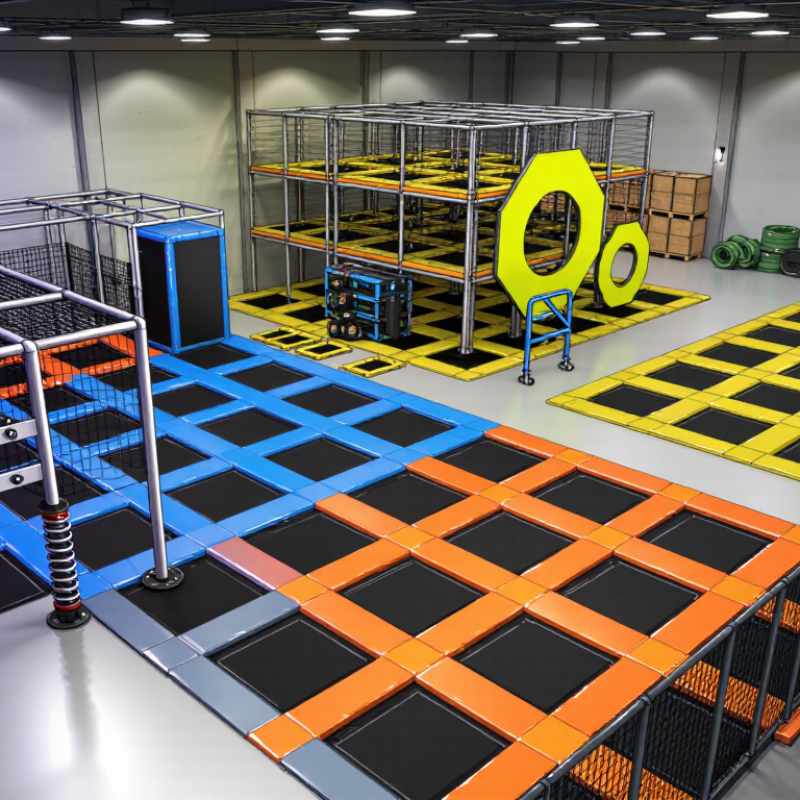
Indoor Trampoline Park Industry Overview for Global Buyers
2026 Top Indoor Trampoline Park Suppliers for Global Buyers
The indoor trampoline park industry is expanding with demand for active, weather-proof family entertainment. Grand View Research valued the global amusement parks market at approximately US$57 billion in 2023, with continued growth projected through 2030. Trampoline parks remain a smaller segment, but their modular layouts support fitness zones, climbing walls, soft play, and mixed-age activities.
Global buyers should assess suppliers beyond equipment price. ASTM F2970 provides guidance for trampoline court design, installation, operation, maintenance, and inspection. European projects may also require compliance with EN 13814, local building codes, fire rules, and accessibility requirements. A reliable supplier should provide load calculations, impact-attenuation details, installation drawings, spare-part plans, and documented staff training. These details matter when a busy facility has wet shoes, crowded platforms, or frequent impacts.
Tips: Request a sample inspection checklist and a five-year maintenance estimate before signing. Compare safety documentation line by line. Ask who performs independent testing, not only factory checks. IAAPA industry research shows that attractions generate significant economic activity worldwide, yet local attendance forecasts can be less certain. That is the weak point many feasibility studies miss. Use conservative visitor estimates, seasonal sensitivity tests, and a clear replacement budget. A beautiful design can still fail commercially if cleaning time, insurance, staffing, and energy costs are underestimated.
Key Criteria for Evaluating Indoor Trampoline Park Suppliers
Choosing an indoor trampoline park supplier requires more than comparing colorful equipment catalogs. Experienced buyers inspect design, manufacturing, installation, and after-sales service. Ask for project records showing park size, ceiling height, visitor capacity, and installation timelines. Real experience appears in details. Request photographs of anchor points, padded transitions, netting, and floor protection. A reliable supplier should explain material grades, load testing, maintenance intervals, and replacement procedures clearly.
Safety documentation deserves careful review. Check whether platforms, trampolines, foam pits, climbing elements, and access gates follow relevant local standards. Ask for test reports from qualified, independent laboratories, not only internal claims. Confirm who supervises installation and how staff training is delivered. A professional supplier provides drawings, risk assessments, inspection checklists, and emergency planning support. Verify warranty coverage, spare-part availability, response times, and shipping responsibilities before signing. Vague promises become expensive.
Evaluate communication during the quotation stage. Do technical answers arrive quickly and consistently? Can the supplier adjust layouts without hiding critical costs? Request a sample specification sheet and compare it with the final contract. Review references from operators in similar climates and customer volumes. One weakness matters: excellent equipment may come with limited local service. That gap needs a practical solution. I would also budget for future upgrades, because visitor behavior and safety expectations change. Cheap pricing can help, but it should never replace documented quality, transparent engineering, and accountable support.
2026 Comparison of Leading Indoor Trampoline Park Suppliers
2026 Comparison of Leading Indoor Trampoline Park Suppliers
Global buyers are comparing more than equipment prices in 2026. The strongest suppliers usually fall into three groups: turnkey manufacturers, regional installers, and modular equipment specialists. Turnkey suppliers can design layouts, produce attractions, and coordinate installation. They suit investors seeking one project contact. Regional installers often understand local building practices better. Their equipment range may be narrower, though. Modular specialists provide flexible components, which helps parks expand without rebuilding the entire site.
A reliable comparison should examine material certificates, load calculations, fall-zone planning, and maintenance procedures. Ask for recent project references with photos of entrances, padding, platforms, and service areas. A serious supplier should explain inspection schedules and replacement-part availability in writing. It should also adapt drawings to ceiling height, visitor flow, emergency exits, and cleaning routines. Small details matter. For example, sealed padding reduces dust collection around busy landing zones. Clear labeling can shorten staff training during a crowded opening week.
Price still matters, but the lowest quotation deserves careful questioning. It may exclude shipping, installation, staff training, or annual inspections. I have seen attractive proposals become difficult after site changes. That risk is easy to underestimate. Buyers should compare total ownership cost over five years, not only the purchase invoice. Supplier communication is another practical test. Slow answers before a contract may become slower support later. No supplier wins every category, so the final choice should match the park’s size, operating team, climate, and expansion plans.
2026 Top Indoor Trampoline Park Suppliers for Global Buyers
2026 Comparison of Leading Indoor Trampoline Park Suppliers
The chart compares anonymized supplier profiles using common global buyer criteria: safety documentation, customization capability, installation coverage, after-sales support, and delivery readiness. Scores are normalized on a 100-point procurement scale and are intended to support early-stage supplier screening without disclosing company or brand names.
Product Range, Customization, Safety, and Certification Standards
2026 Top Indoor Trampoline Park Suppliers for Global Buyers
A strong supplier should offer more than trampolines. Product ranges may include interconnected courts, foam pits, climbing walls, dodgeball zones, toddler areas, and padded platforms. Customization should match your floor plan, ceiling height, visitor flow, and operating capacity. Ask for detailed drawings, load ratings, material samples, and installation instructions before approving production. Small layout mistakes can create costly safety problems later.
Tips: Request a site-specific design review. Check padding thickness, spring protection, net strength, anchor points, and emergency access. Confirm whether replacement mats and safety parts remain available. Do not accept attractive images as technical evidence. Real maintenance planning matters.
Safety documentation should identify testing methods, inspection intervals, cleaning procedures, and staff training requirements. For global projects, suppliers may reference standards such as ASTM F2970 or applicable European safety requirements. Certification names alone are not enough. Request current test reports, factory quality records, material specifications, and traceable product batches. Fire performance should also be verified for foam, fabric, and wall materials. Requirements differ by location, so local engineers and authorities should review the final design. A polished certificate can still leave practical gaps. Reflect carefully, and verify every claim independently.
International Purchasing, Installation, Warranty, and After-Sales Support
For global buyers, selecting an indoor trampoline park supplier involves more than comparing equipment prices. A reliable partner explains factory experience, load testing, material grades, and project references clearly. Ask for layout drawings matching your building’s columns, exits, ceiling height, and visitor flow. A polished sales presentation is not enough. Request installation schedules, packing lists, and responsibility boundaries before paying a deposit.
International purchasing can become difficult when measurements use different units or shipping terms remain vague. Confirm the product scope, spare parts, technical documents, and delivery milestones in writing. Experienced suppliers should support remote design reviews and guide local contractors during installation. For complex parks, an on-site supervisor may reduce mistakes during frame assembly, padding placement, and anchor inspection. In practice, site access is often underestimated. A narrow loading door can delay unloading and increase labor costs. That planning gap deserves honest review.
Warranty terms require equal attention. Check coverage periods, exclusions, response times, and replacement-part availability in your region. Strong after-sales support includes digital manuals, maintenance checklists, inspection videos, and a named service contact. Ask how faults are diagnosed when photos are incomplete or internet access is weak. Some suppliers promise rapid assistance but define no measurable response time. That is a warning sign. Keep records of cleaning, bolt checks, padding replacement, and staff training. Even a well-designed park can lose reliability when daily inspections become informal.
