10 Bathroom Hardware Buying Tips for Global Buyers
Buying Bathroom Hardware for international projects is not simply a matter of choosing attractive finishes. A polished chrome tap may look impressive online, yet its cartridge, thread size, water pressure rating, and replacement support matter more after installation. Global buyers also face different climates, building standards, supplier practices, and maintenance expectations. A product that performs well in a London apartment may disappoint in a coastal hotel or a humid Southeast Asian home.
Bathroom design consultant Jamie Gold describes the practical goal clearly: “The best bathroom products support wellness without demanding attention.” That idea guides this buying review. Reliable hardware should feel stable, operate smoothly, resist corrosion, and remain easy to clean. It should also arrive with clear specifications, installation instructions, warranty terms, and accessible spare parts. Small details matter. A loose towel bar, mismatched screw, or missing washer can delay an entire project.
Real purchasing experience teaches a less comfortable lesson: the lowest quoted price is rarely the complete cost. Freight, customs handling, damaged units, replacement parts, and installation time can change the final budget. Some product listings also provide incomplete measurements. That is risky. Buyers should check dimensions twice, request samples when possible, and test supplier communication before placing large orders. No checklist removes every uncertainty. Still, these ten tips create a more disciplined path for selecting Bathroom Hardware that is durable, compatible, maintainable, and suitable for international use.
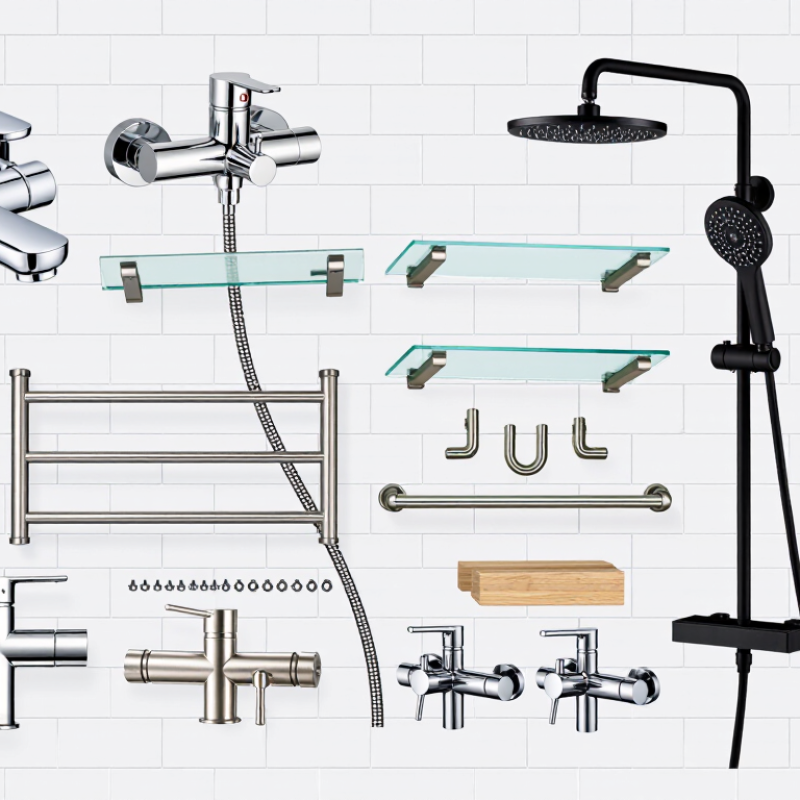
Define Your Bathroom Hardware Needs and Project Requirements
Before comparing bathroom hardware, define the project clearly. List each item, installation location, quantity, finish, dimensions, and expected service life. Record wall thickness, drilling positions, pipe connections, water pressure, and available clearance. Small errors become expensive when fixtures arrive at a different jobsite.
Water efficiency also needs a measurable target. The U.S. Environmental Protection Agency states that WaterSense-labeled bathroom faucets use no more than 1.5 gallons per minute, at least 30% less than standard models. This matters in hotels, apartments, and water-stressed regions. Check local flow-rate rules before ordering. Do not assume one specification fits every country.
Material selection should follow the environment, not only appearance. Coastal bathrooms need strong corrosion resistance, while busy public washrooms need secure mounting and easy cleaning. For accessible projects, review reach ranges, grip size, operating force, and contrast requirements. ISO 7170 testing can help assess furniture durability, but it does not replace checking the actual product construction. I have seen attractive samples fail because concealed screws rusted or wall anchors were undersized. That mistake is easy to repeat. Request drawings, installation instructions, test reports, coating details, and spare-part information before approval. Confirm packaging and labeling for multilingual sites, too. A perfect finish cannot compensate for unclear installation data.
Check Measurements, Compatibility, and Installation Methods
Before ordering bathroom hardware, measure the actual installation area, not only the old product. Record hole spacing, pipe diameter, wall thickness, and available clearance. A few millimeters can affect the fit. I have seen attractive hardware fail because a cabinet door blocked the handle.
Tip:
Create a measurement sheet.
Include photos, sketches, and units. Mark whether measurements use millimeters or inches. This small habit prevents costly misunderstandings with overseas suppliers. It also gives installers clearer information when product packaging uses unfamiliar standards. I sometimes measure twice and still miss the wall slope. That mistake is worth checking.
Compatibility involves more than size. Confirm thread types, connection standards, water pressure limits, and mounting surfaces. A fitting designed for a rigid wall may need different anchors on tile or hollow board. Check whether the kit includes screws, seals, brackets, and installation instructions. Do not assume every accessory is included. Ask for technical drawings and material specifications before payment.
Tip:
Test the installation method.
For wall-mounted items, identify studs or suitable reinforcement before drilling. For adhesive-mounted pieces, clean and dry the surface completely. Temperature and humidity can weaken bonding. When replacing older hardware, keep the removed parts until installation is complete. They may reveal hidden adapters or unusual fixing points. Professional advice is useful when plumbing connections are concealed, but simple checks should happen before that call.
Evaluate Suppliers, Certifications, Pricing, and Minimum Orders
Global buyers should audit suppliers beyond polished catalogs. Request business licenses, factory addresses, ownership details, and recent production photos. Ask for three customer references in comparable markets. Verify whether the factory or a trading company issues the quotation. A trading company is not automatically risky, but unclear responsibility creates delays. Check quality procedures, inspection records, corrective-action reports, and response times. An audit should include packaging, plating thickness, thread accuracy, and corrosion testing. Small defects become expensive after container loading.
Certifications must match the destination market and product type. Ask for complete test reports, certificate numbers, issuing laboratories, and expiry dates. Do not accept a logo image alone. ISO’s 2022 Survey recorded 1,265,216 ISO 9001 certificates across 183 countries and economies, but certification still requires verification. For water-saving fittings, the U.S. Environmental Protection Agency states that WaterSense-labeled products use at least 20% less water while maintaining performance. Local plumbing rules may differ. Confirm them before sampling.
Compare total landed cost, not only unit price. Include tooling, samples, testing, export packing, freight, duties, payment fees, and possible inspection costs. Request price validity and adjustment terms for metals and currency changes. A low quote can hide thin plating or weak packaging. Calculate MOQ against realistic sales velocity, storage space, and cash flow. Ask whether mixed finishes or models can share one MOQ. Negotiate a pilot order with measurable acceptance criteria. It may cost more per unit, but reduces stranded inventory. Perfect demand forecasts are unrealistic; review MOQ assumptions after the first shipment.
10 Bathroom Hardware Buying Tips for Global Buyers
Recommended evaluation weights for comparing suppliers, certifications, pricing, quality, logistics, and minimum order requirements. The percentages form a practical 100-point procurement framework and are not based on any company or brand.
Use the framework to score each supplier consistently: verify documentation, compare equivalent specifications, confirm production and shipping terms, and calculate the total landed cost before placing an order.
Confirm Quality Control, Packaging, Shipping, and After-Sales Support
When buying bathroom hardware internationally, quality control should be verified before payment. Ask for material certificates, surface-finish standards, and inspection photos from the actual production batch. Stainless steel should resist rust after salt-spray testing, while moving parts should operate smoothly without grinding. Request dimensional drawings, because a few millimeters can prevent correct installation. A sample is useful, but it may not represent every shipment. That gap deserves attention.
Packaging must protect polished surfaces and delicate threads. Each item should have a protective sleeve, separate compartments, and moisture-resistant cartons. Drop-test records can reveal weak corners or excessive empty space. Mark cartons with quantity, model code, and handling instructions. I once saw attractive products arrive with scratched finishes because the inner dividers shifted during transit. The design looked careful. The packing test was not.
Shipping documents should match the physical goods exactly. Confirm carton dimensions, gross weight, loading photographs, and agreed delivery terms. Build time for port delays and customs questions. For after-sales support, request a written process for missing parts, defects, and installation problems. A reliable supplier should provide response times, replacement procedures, and clear evidence requirements. Keep photos, batch numbers, and inspection records. Do not assume every complaint proves supplier fault. Some failures result from incorrect installation, and buyers should review their own process honestly. That reflection can prevent repeated costs.
