How to Choose Dining Room Sets for Global Buyers?
Choosing dining room sets for global buyers involves more than matching a table with attractive chairs. It requires practical evaluation, clear specifications, and reliable supplier communication. A set that suits a compact London apartment may feel oversized in a Singapore dining area. Begin with room measurements, doorway widths, seating needs, and daily dining habits. Leave enough space for chairs to move comfortably.
Material selection also deserves careful attention. Solid wood offers warmth and repairability, while engineered wood can reduce weight and cost. However, quality varies significantly between suppliers. Ask about wood species, surface treatments, moisture resistance, joint construction, and load capacity. A walnut finish should look consistent across the tabletop and chair frames. Small samples can reveal color differences that photographs hide.
Global purchasing adds further responsibilities. Buyers should review packaging strength, assembly instructions, replacement-part support, and delivery terms before placing an order. Confirm that products meet applicable safety, labeling, chemical, and import requirements in the destination market. These requirements differ by country and may change. Professional suppliers should provide accurate documentation rather than vague promises. It is also wise to inspect pre-shipment samples or request independent quality checks.
Budget matters, but the lowest quotation may create higher costs later. Weak cartons, unclear warranties, or difficult assembly can damage customer trust. We may not predict every household preference perfectly. That is the uncomfortable part. Still, a structured comparison helps buyers choose dining room sets that balance design, durability, compliance, and long-term value. Practical evidence beats attractive claims.
Define Your Dining Room Needs and Buyer Requirements
Choosing dining room sets starts with the room, not the catalog. Measure the length, width, doorway, elevator, and table clearance. Leave about 90 centimeters behind each chair for comfortable movement. A six-seat table may look practical online, yet overwhelm a narrow apartment. I learned this after seeing buyers return attractive sets that blocked balcony doors. The measurement sheet should include family habits, guest frequency, and preferred seating. Daily meals need different support from occasional entertaining.
Global buyers should define requirements before requesting quotations. Specify table size, chair count, finish, material composition, upholstery, and target price. Ask for material specifications, care instructions, test reports, and packaging photos. Requirements vary by market. Humid regions may need moisture-conscious construction, while dry climates can expose weak joints. Families with children may prefer rounded corners and stain-resistant surfaces. Check whether dimensions fit local homes and shipping cartons. Do not assume “standard” means universal. Clarify tolerances, assembly steps, replacement parts, minimum order quantities, lead times, and delivery terms.
A dependable evaluation compares samples with approved specifications. Check wobble, drawer alignment, edge finishing, odor, and chair comfort after twenty minutes. Comfort remains difficult to judge from photographs. That limitation deserves honest discussion. Request a pre-shipment inspection or independent quality check where practical. Keep signed drawings and revision records. Clear records reduce disputes and support consistent repeat orders. Small oversights can become expensive overseas.
Compare Dining Room Set Styles, Materials, and Construction
How to Choose Dining Room Sets for Global Buyers?
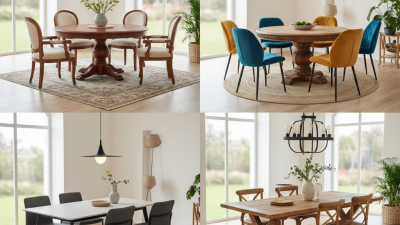
Style should match the room, not only the showroom photograph. Contemporary sets use clean lines, slim profiles, and neutral finishes. Traditional designs often feature carved details, turned legs, and warmer wood tones. Transitional styles bridge both approaches and usually adapt better to changing interiors. According to Statista’s 2024 furniture market data, living-room and dining-room furniture remain major global spending categories, but buyers still compare function, durability, and appearance carefully. A beautiful table that blocks a walkway is a poor purchase.
Material choice affects weight, maintenance, and service life. Solid wood offers repairability and visible grain, while engineered wood can improve dimensional stability in humid regions. Veneer provides a real wood surface with lower material use, but edge sealing must be inspected. Glass creates visual lightness; ceramic tops resist scratches but may chip at corners. The Forest Stewardship Council’s 2023 market data shows certified forest products remain widely available, helping buyers request traceable wood rather than vague sustainability claims. Ask for moisture resistance testing.
Construction reveals more than styling. Check mortise-and-tenon joints, reinforced corner blocks, steel fasteners, and adjustable feet. Chairs should feel stable after repeated sideways movement. Tables need an apron that supports the top without restricting seasonal expansion. A 2024 Grand View Research report estimates continued growth in the global home furniture market, increasing the importance of consistent quality across export markets. Still, reports cannot replace inspection. I once overlooked uneven chair glides; the set looked excellent, yet rocked on tile flooring. Packaging, assembly instructions, and replacement hardware deserve equal attention.
Measure the Space and Plan the Room Layout
Choosing a dining room set begins with accurate measurements, not attractive photographs. Measure the room’s length and width, then note doors, windows, radiators, and walking routes. Keep at least 90 centimeters between the table edge and nearby walls or furniture. This clearance supports comfortable seating and safer movement. For global buyers, record measurements in centimeters and inches. Small conversion errors can cause expensive problems. I once planned around a doorway but forgot its opening angle. The table arrived, but the room felt tighter than expected.
Mark the table footprint on the floor with masking tape. Add each chair’s pulled-out space, especially near walls or cabinets. A rectangular table may suit a narrow room, while a round table can improve circulation in compact spaces. Check ceiling height if you plan to install pendant lighting. Leave enough distance above the table for clear sightlines. Consider delivery access too. Measure elevators, stair turns, and entrance doors before ordering. A perfect layout is useless if the furniture cannot enter.
Tips: Create a simple floor plan before shopping. Test two layouts for one day. Walk around the taped outline. Notice where movement feels awkward. Leave flexible space for guests, children, or serving dishes. Recheck every measurement with another person, because even careful planning can miss one practical detail.
How to Choose Dining Room Sets for Global Buyers? Measure the Space and Plan the Room Layout
The chart shows practical minimum room dimensions for common dining capacities. The planning model adds approximately 36 inches of circulation space around the table, allowing chairs to be pulled out and people to move comfortably. Always verify the actual table, chair, doorway, and walkway measurements before purchasing.
Evaluate Suppliers, Quality Standards, and Customization Options
How to Choose Dining Room Sets for Global Buyers?
Supplier evaluation should begin with evidence, not attractive showroom photos. Grand View Research valued the global furniture market at approximately USD 516.66 billion in 2022, with continued growth projected through 2030. This expansion creates more sourcing choices, but also more inconsistent factories. Request business licenses, production capacity, export records, and recent third-party audit reports. A factory visit should include the cutting, finishing, assembly, and packaging areas. A polished showroom can mislead. Always compare the approved sample with mass-production controls.
Quality standards must match the destination market. For dining tables, ask whether products meet relevant domestic furniture requirements, such as EN 12521 for safety, strength, and durability. Check wood moisture levels, joint stability, coating adhesion, edge smoothness, and formaldehyde testing. ISO 9001 can support process management, but it does not prove product safety. The World Bank’s 2023 Logistics Performance Index assessed 139 economies and highlighted differences in customs, infrastructure, and delivery reliability. Use those findings when reviewing lead times and shipping plans.
Customization should be documented in drawings, not informal messages. Confirm dimensions, wood species, veneer direction, stain references, carton strength, labeling, and acceptable tolerances. Ask for a pre-production sample. Then test it under realistic use, including spills, heat, and repeated chair contact. Custom work raises minimum order quantities and replacement risks. No checklist is perfect. I would still reserve budget for one failed sample, because real furniture often exposes weaknesses that factory documents do not.
Review Costs, Shipping Terms, and After-Sales Support
Choosing a dining room set for international delivery requires more than comparing the showroom price. Request a complete quotation covering the table, chairs, packaging, export documents, freight, insurance, duties, and local delivery. Ask which currency applies and how long the price remains valid. Exchange rates can change before payment. A low product price may become expensive after customs clearance and residential delivery.
Shipping terms deserve careful attention. Confirm the agreed Incoterm, delivery address, estimated transit time, and unloading responsibility. Check whether the carrier delivers to the room or only the curb. For a solid wood table, inspect the packaging plan, corner protection, moisture control, and replacement process for transit damage. Ask for photos before dispatch and record the carton condition upon arrival. I once trusted an attractive freight estimate that excluded destination handling fees. That mistake was avoidable.
Tips: Compare landed costs, not unit prices. Request a written warranty, response-time promise, and spare-parts policy. Clarify whether damaged chairs, missing hardware, or surface defects qualify for replacement. Reliable suppliers should explain claims procedures without vague promises. Keep invoices, inspection photos, and delivery records. A spreadsheet helps, but it can still miss local taxes or storage charges. Leave a small budget for unexpected costs. That is practical, not pessimistic.
How to Choose Dining Room Sets for Global Buyers? - Review Costs, Shipping Terms, and After-Sales Support
| Buyer Market | Recommended Set Configuration | Typical Factory Price (USD / Set) |
Estimated Ocean Freight (USD / 40-ft Container) |
Typical Production Lead Time |
Common Shipping Terms | Import Cost Factors | Recommended After-Sales Support | Best Selection Priority |
|---|---|---|---|---|---|---|---|---|
| North America | Dining table for 6–8 people with upholstered or wooden chairs; flat-pack construction is preferred for efficient loading. | $280–$850 | $2,500–$6,500 | 35–60 days | FOB for experienced importers; DAP for simplified delivery planning. | Customs duty, merchandise processing fees, port charges, inland delivery, and possible anti-dumping requirements for certain products. | 12-month structural warranty, spare hardware, replacement-part availability, and damage claims supported by photos within 7 days of delivery. | Packaging strength, consistent dimensions, easy assembly, and compliance with applicable furniture safety standards. |
| Western Europe | Compact 4–6 seat sets using certified timber or engineered wood, with water-based finishes and removable chair covers. | $320–$950 | $2,000–$5,000 | 40–65 days | FCA or FOB for buyer-controlled freight; DAP when delivery visibility is more important. | Import VAT, customs duty, Extended Producer Responsibility obligations, packaging waste fees, and product documentation. | Written warranty terms, material and care instructions, batch traceability, repair instructions, and replacement components for at least 5 years where required. | Sustainably sourced materials, low-emission finishes, product safety documentation, and recyclable packaging. |
| United Kingdom | 4–6 seat sets with narrow table widths, moisture-resistant finishes, and chairs suitable for frequent household use. | $300–$900 | $2,100–$5,200 | 40–65 days | FCA, FOB, or DAP; clarify whether import VAT and duty are excluded. | UK import VAT, customs duty, customs clearance, port handling, inland transportation, and packaging compliance. | Clear returns procedure, defect replacement policy, English-language manuals, and a defined response time of 2 business days or less. | Accurate product measurements, robust cartons, moisture protection, and transparent landed-cost calculations. |
| Australia and New Zealand | Solid or engineered-wood sets with UV-resistant coatings, reinforced cartons, and seating for 4–8 people. | $350–$1,000 | $2,800–$6,800 | 45–75 days | FOB or CIF; use DAP only when destination charges are itemized in writing. | Biosecurity inspection, import duty, GST, port fees, quarantine-related charges, and inland delivery to remote areas. | Pest-treatment records when applicable, moisture-resistant packing, 12-month warranty, and replacement panels or fittings. | Biosecurity compliance, container utilization, corrosion-resistant fittings, and packaging suitable for long-distance transit. |
| Middle East | 6–8 seat sets with scratch-resistant surfaces, heat-tolerant finishes, and optional extension leaves. | $300–$900 | $1,800–$4,500 | 35–60 days | CIF for port delivery; DAP for coordinated inland delivery and customs support. | Customs duty, VAT where applicable, destination handling fees, documentation charges, and last-mile delivery. | Heat and humidity care guidance, spare fasteners, finish touch-up kits, and remote video support for assembly issues. | Heat resistance, finish durability, stable packaging, and clearly stated destination charges. |
| Southeast Asia | Space-saving 4–6 seat sets with ventilated packaging, compact cartons, and finishes suited to humid climates. | $220–$700 | $700–$2,800 | 25–50 days | FOB, CFR, or EXW depending on the buyer’s logistics capability. | Local import duty, VAT or sales tax, port handling, inland delivery, and possible certification requirements. | Mildew-prevention instructions, spare parts, online assembly guidance, and replacement support for transit damage. | Humidity resistance, compact shipping volume, fast replenishment, and easy access to replacement hardware. |
| Latin America | Durable 4–6 seat sets with reinforced joints, simple components, and finishes that tolerate frequent cleaning. | $240–$780 | $1,500–$4,800 | 35–65 days | CFR or CIF for port-based imports; FOB for buyers with established freight contracts. | Import duty, VAT or local sales taxes, customs brokerage, port storage, inland transport, and currency-related costs. | Spanish or Portuguese documentation, spare hardware, claim procedures, and a minimum 12-month structural warranty. | Joint strength, carton durability, local-language instructions, and predictable customs documentation. |
Related Posts
-
Emerging Trends in Dining Room Sets Industry at the 138th Canton Fair 2025 Insights and Projections
-
Why Choosing the Right Dining Table Set Can Transform Your Home Experience
-

10 Essential Tips for Choosing the Perfect Solid Wood Dining Table?
-
Top 10 Dining Set Trends for Your Home Design Needs?
-

China Best Wood Dining Table Styles for Your Home?
-
What is the Best Dining Room Table Sets for Every Home Style?