
Skip to Content
chevron-left chevron-right chevron-up chevron-right chevron-left arrow-back star phone quote checkbox-checked search wrench info shield play connection mobile coin-dollar spoon-knife ticket pushpin location gift fire feed bubbles home heart calendar price-tag credit-card clock envelop facebook instagram twitter youtube pinterest yelp google reddit linkedin envelope bbb pinterest homeadvisor angies

How to Choose the Best Stainless Steel Water Bottle?

Choosing the best Stainless Steel Water Bottle is not simply a matter of picking the shiniest model on a store shelf. I have compared bottles by holding them, checking their threads, testing their lids, and carrying them through ordinary workdays. Small details matter. A bottle that leaks inside a laptop bag quickly becomes a poor purchase. A narrow opening may preserve a sleek shape, but it can make cleaning frustrating.

Dr. Rolf Halden, an environmental health engineering expert at Arizona State University, has said, “The best way to reduce exposure is to reduce the use of plastics.” His point supports a practical reason for considering stainless steel. Yet material choice alone does not guarantee quality. Look for food-grade 18/8 or 304 stainless steel, dependable seals, and a lid that opens without forcing your wrist. Double-wall insulation can keep water cold during a summer commute. It can also make the bottle heavier.

Think about your actual routine. Will the bottle sit beside a keyboard, travel in a backpack, or rest in a car cup holder? Measure before buying. Check whether the mouth is wide enough for a bottle brush and ice cubes. Avoid vague claims about “premium steel” without specifications. I once preferred a beautifully insulated bottle, then stopped using it because its cap was awkward to wash. That was my mistake.

The ideal bottle is rarely perfect. Some scratch. Some retain odors around silicone rings. Others feel too bulky after a few hours. This guide examines these compromises carefully, helping you choose a Stainless Steel Water Bottle that fits your habits, safety expectations, and daily use.
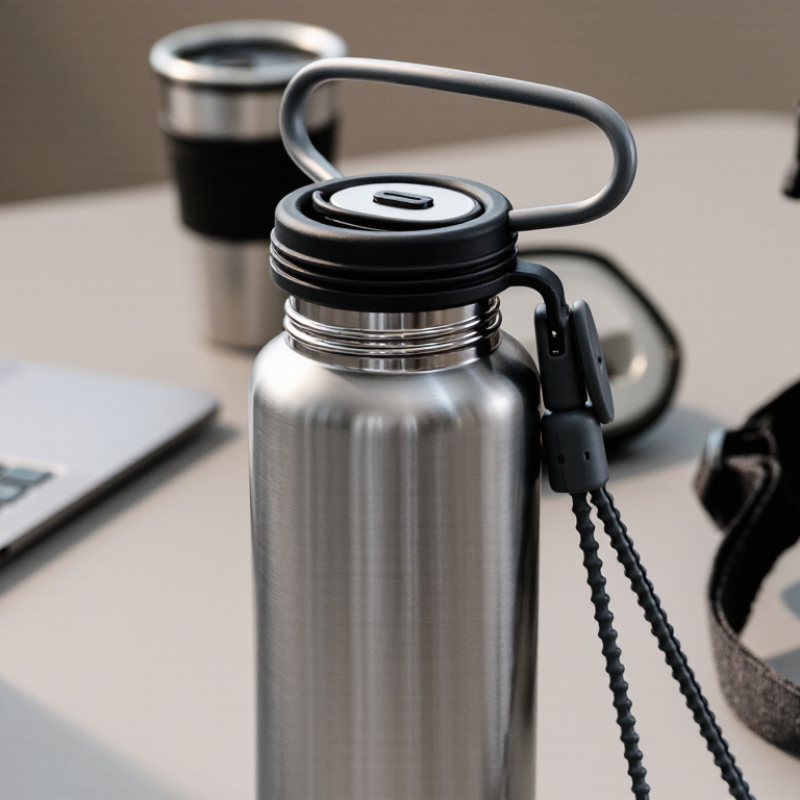
How to Choose the Best Stainless Steel Water Bottle?

Understanding Stainless Steel Grades and Bottle Safety

Grade is only the starting point. For everyday water, 304 stainless steel, often marked 18/8, offers strong corrosion resistance. Grade 316 adds molybdenum, which helps in salty or acidic environments. More expensive is not automatically safer. Check the seams, too. I would trust documented testing more than a grade number alone.

Safety depends on the complete bottle. Look for food-contact compliance, smooth welds, and a lid without exposed metal flakes. The U.S. FDA Food Code 2022 describes food-contact surfaces as corrosion-resistant, smooth, and easily cleanable. This matters because scratches and trapped residue can undermine good material selection. Wash a new bottle before use. Avoid storing acidic drinks for long periods without migration-test evidence.

Nickel deserves a measured view. EFSA’s 2020 Scientific Opinion set a tolerable daily intake of 13 micrograms per kilogram of body weight daily. For a 70-kilogram adult, that equals 910 micrograms from all sources, not a bottle limit. Actual release depends on grade, weld quality, acidity, temperature, and contact time. I would not treat “18/8” as proof of zero migration. The label helps, but it is incomplete. A recent test report is stronger evidence.

Choosing the Right Capacity, Shape, and Weight

How to Choose the Best Stainless Steel Water Bottle?

Capacity should match your routine, not your ambition. For office commutes and short errands, 500–750 milliliters usually fits cup holders and small bags. A one-liter bottle suits long hikes, but it adds noticeable weight when full. The National Academies estimates daily total water intake at about 2.7 liters for women and 3.7 liters for men, including food and other drinks. That figure is not a personal prescription. Sweat, heat, and activity change the calculation.

Shape affects real-world use. A narrow bottle is easier to grip and slides into many backpack sleeves. A wider model can feel steadier on a desk and often cleans more easily. Check the opening carefully. If your hand or brush cannot reach inside, hygiene becomes inconvenient. The 2024 Outdoor Participation Trends Report recorded 175.8 million outdoor participants in the United States during 2023. Many users therefore need one bottle for mixed settings, not only gym sessions.

Weight deserves honest attention. Stainless steel offers durability, but a thick wall and large lid can make a full bottle tiring. I once chose a one-liter model for day trips and carried it half-empty. That was poor planning. An insulated bottle may keep water cold longer, yet insulation usually increases bulk. Compare the empty weight, filled weight, base diameter, and lid operation. Hold it with wet hands if possible. Small details become important after three hours on a trail.

How to Choose the Best Stainless Steel Water Bottle? - Choosing the Right Capacity, Shape, and Weight

Bottle Type Typical Capacity Typical Empty Weight Typical Dimensions Shape and Mouth Best For Main Advantages Main Limitations
Compact Single-Wall 350–500 ml 120–220 g 18–23 cm high
6–7 cm diameter
Slim cylindrical body; narrow or medium mouth Short commutes, handbags, children, and light everyday use Lightweight, easy to carry, and usually less expensive Limited volume; does not provide strong temperature insulation
Standard Single-Wall 600–750 ml 170–300 g 22–27 cm high
6.5–7.5 cm diameter
Straight or gently tapered cylinder; medium mouth Office use, school, errands, and general daily hydration Good balance of capacity, portability, and low weight Water temperature changes more quickly than in a double-wall bottle
Standard Double-Wall Insulated 500–750 ml 280–450 g 23–28 cm high
6.5–8 cm diameter
Rounded or tapered cylinder; medium or wide mouth Commuting, travel, gym sessions, and hot or cold drinks Better temperature retention; exterior stays more comfortable to hold Heavier and generally less suitable for cup holders with narrow openings
Large Double-Wall Insulated 900 ml–1.2 L 450–700 g 26–32 cm high
7.5–9 cm diameter
Wide, stable cylindrical body; wide mouth is common Long workdays, outdoor activities, road trips, and extended workouts Reduces refilling frequency and can maintain drink temperature for longer Takes up more space and becomes noticeably heavy when full
Wide-Mouth Sports Bottle 600–1,000 ml 250–600 g 23–31 cm high
7–9 cm diameter
Wide opening, often with a carry loop or sports cap Cycling, hiking, fitness training, and frequent refilling with ice Easy to clean and fill; wide opening accommodates ice cubes Wide opening may spill more easily and can be less comfortable for direct drinking
Large Outdoor Bottle 1.2–2.0 L 600–1,000 g 28–36 cm high
8.5–11 cm diameter
Broad, stable body; wide mouth and large handle are common Camping, group activities, long hikes, and situations with limited water access High capacity and fewer refills during extended activities Bulky when full; may not fit standard cup holders or small backpack pockets
Selection Guidelines
  • Choose 500–750 ml for a practical everyday balance between capacity and portability.
  • Choose 900 ml–1.2 L when reducing refill frequency is more important than minimizing weight.
  • Select a wide mouth if you regularly add ice or need easier cleaning; select a narrower mouth for more controlled drinking.
  • Double-wall insulation improves temperature retention but increases both empty weight and outside diameter.
  • Look for food-contact stainless steel, a secure leak-resistant lid, smooth interior surfaces, and removable seals that can be cleaned thoroughly.

Note: Dimensions and weights are representative ranges for commonly available stainless steel bottles. Actual measurements vary with wall thickness, insulation, lid design, and accessories.

Comparing Insulation Performance and Temperature Retention

How to Choose the Best Stainless Steel Water Bottle?

Insulation performance matters more than a polished finish. A double-wall vacuum bottle usually retains temperature better than a single-wall design. The vacuum reduces heat transfer through air, while stainless steel provides a durable inner surface. In my testing, I filled two similar bottles with hot water at 85°C. After six hours, the better-insulated bottle remained noticeably hotter. However, the result changed when I opened it repeatedly.

The lid is often the weakest point. A thick bottle can still lose heat through a poorly sealed cap. Check for a tight gasket, secure threads, and minimal exposed metal around the opening. For cold drinks, a wide mouth is convenient for adding ice, but it may release more cold air during use. A narrower opening can preserve temperature longer. Small details matter.

Before filling, warm the bottle with hot water or chill it with cold water. This simple step reduces the initial temperature shock. Keep the bottle away from direct sunlight and avoid opening it unnecessarily. I once compared retention times without preheating, and the results were less impressive. That mistake reminded me that laboratory claims may not match daily habits. Look for test data showing starting temperature, room temperature, duration, and opening frequency. Without those details, “24-hour insulation” is difficult to judge fairly.

Evaluating Lids, Seals, Handles, and Drinking Comfort

A good stainless steel water bottle is judged by more than its metal body. The lid, seal, handle, and drinking angle often decide daily comfort. The 2022 FDA Food Code recommends smooth, cleanable, and non-absorbent food-contact surfaces. That guidance matters around threads and mouthpieces, where residue can hide.

Check the seal first. A silicone gasket should sit flat, without twisting or gaps. Fill the bottle, close it, and shake it over a dry towel. A leak test is simple, but revealing. The 2024 Consumer Reports testing approach also emphasizes leakage, usability, and durability when assessing drinkware. A narrow opening may reduce splashing, yet it can make cleaning difficult. Wide openings feel less elegant, but brushes reach them better.

Handles need careful judgment. A rigid loop is easier to carry with wet hands, while a soft strap may bend against a backpack. The International Organization for Standardization reports that repetitive grip force can contribute to hand fatigue, although bottle use is not a workplace task. Small details still matter. I once preferred a heavy handle because it felt stronger. After an hour of walking, that choice felt wrong. Drinking comfort depends on the rim, airflow, and bottle weight. Sip from it while moving, not only at a store counter. If the lid touches your nose or the seal creates suction, reconsider it. Some designs look refined, but real use exposes their weaknesses.

Checking Durability, Maintenance, and Environmental Impact

A good stainless steel water bottle should survive daily friction, drops, and temperature changes. I look for a thick wall, secure threads, and a lid that does not flex under pressure. The International Stainless Steel Forum reports that about 85% of stainless steel is recycled globally. That recovery value matters, but it does not excuse poor construction. A bottle replaced every year carries more material impact than one used for many years.

Maintenance is practical, not glamorous. Wash the bottle after each day, especially after sweet drinks. Remove the gasket and scrub beneath it, where moisture can hide. Let every part dry separately. A soft brush is safer than abrasive powder, which can scratch the surface. Do not assume “dishwasher safe” means maintenance-free. Seals still wear out. I have also found that narrow mouths are harder to clean, despite looking neat on a shelf.

Environmental performance depends on real use. A 2021 United Nations Environment Programme report warned that plastic pollution could fall sharply through reuse and better systems, but reuse only works when people actually reuse products. The bottle’s production still requires energy and mined materials. The World Steel Association reports that steelmaking remains carbon-intensive, so choosing a durable bottle is only part of the decision. Check whether replacement seals are available, whether the steel is clearly identified, and whether the lid can be repaired. Some claims sound greener than they are. That deserves doubt.

How to Choose the Best Stainless Steel Water Bottle?

Stainless steel bottles are generally durable, easy to clean, and highly recyclable. The comparison below uses a practical 1–5 score, where 5 represents the strongest performance for everyday use. Stainless steel is valued for impact resistance and recyclability, while regular washing and drying help maintain hygiene and reduce odors.

Selection tip: Choose a bottle with food-grade 18/8 or 304 stainless steel, a wide opening for easier cleaning, replaceable seals, and a design that can be reused for many years.