
Skip to Content
chevron-left chevron-right chevron-up chevron-right chevron-left arrow-back star phone quote checkbox-checked search wrench info shield play connection mobile coin-dollar spoon-knife ticket pushpin location gift fire feed bubbles home heart calendar price-tag credit-card clock envelop facebook instagram twitter youtube pinterest yelp google reddit linkedin envelope bbb pinterest homeadvisor angies

How to Choose a Reformer Pilates Machine for Your Business?

Choosing a reformer Pilates machine is a business decision, not merely an equipment purchase. A studio owner must match machine design with class size, instructor habits, room dimensions, and client expectations. The Global Wellness Institute’s 2024 Global Wellness Economy Monitor valued the global wellness economy at $6.3 trillion in 2023. That growth creates opportunity, but it also increases competition. A polished showroom cannot replace reliable performance.

Joseph Pilates described his method as “complete coordination of mind, body, and spirit.” His principle still matters when evaluating a reformer. Smooth carriage travel, stable shoulder rests, quiet springs, and precise footbars affect that coordination. Test the machine yourself. Listen for rattling. Check whether a shorter client can adjust the ropes without assistance. Small details become daily frustrations.

Mindbody’s 2024 State of the Industry Report highlights personalized experiences and holistic wellness as important fitness trends. Therefore, buyers should examine more than frame strength or retail price. Consider warranty coverage, replacement parts, instructor training, cleaning access, and long-term maintenance. A commercial studio may need heavier frames and faster adjustments than a private practice. Not always. The wrong assumption can be expensive.

A careful comparison should include total ownership cost, usable floor space, expected class frequency, and client safety. Six reformers may appear profitable on paper, yet poor spacing can restrict movement and reduce coaching quality. Ask manufacturers for load ratings, material specifications, service response times, and independent user feedback. Some decisions remain subjective. That is acceptable. Reliable evidence, hands-on testing, and honest reflection will produce a stronger investment than following the cheapest quotation.
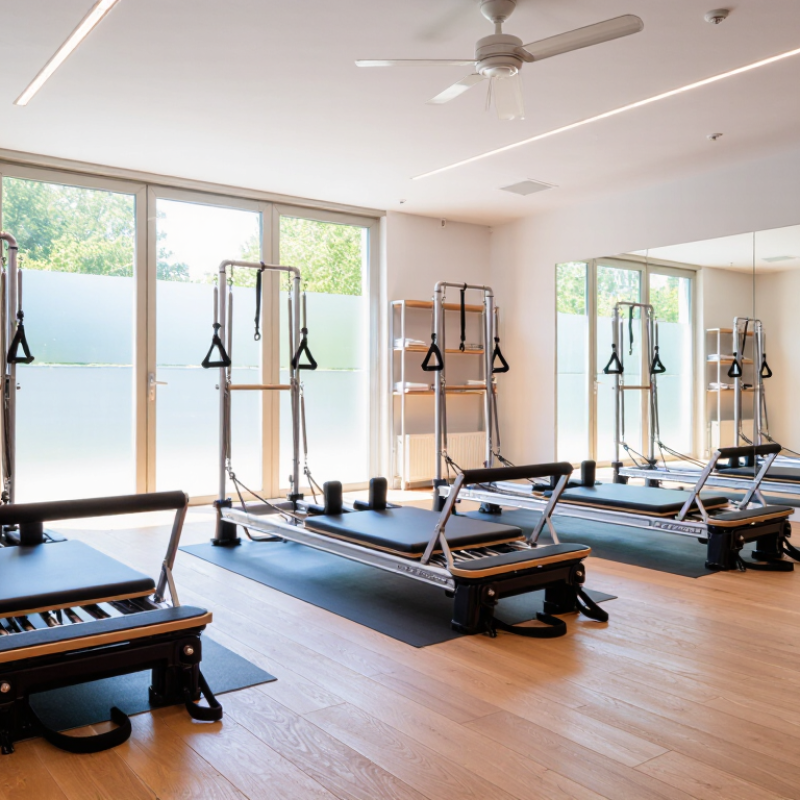
How to Choose a Reformer Pilates Machine for Your Business?

Define Your Business Needs and Pilates Training Goals

Before choosing a reformer, define what your business will actually deliver. A rehabilitation-focused studio needs controlled movement, adjustable resistance, and strong instructor oversight. A high-volume studio may value quick transitions, durable upholstery, and simple maintenance. Write down your expected class size, weekly sessions, user experience, and available floor space. Small details matter.

Your training goals should guide the machine’s specifications. If instructors teach beginners, stable footbars and clear adjustment points can reduce confusion. If advanced clients dominate, wider resistance options and smoother carriage movement may support more demanding programming. The ClassPass 2023 Look Back Report identified Pilates as the most-booked workout globally, with reservations rising 92% year over year. Demand is encouraging, but demand alone does not define your equipment needs.

Budget for the whole operating system, not only the frame. Include delivery, installation, staff training, cleaning, inspections, and replacement parts. The Global Wellness Institute’s 2023 Global Wellness Economy Monitor valued the wellness economy at 5.6 trillion dollars in 2022. That figure signals opportunity, yet it can also encourage rushed purchasing. I would test several machines with real instructors before committing. Ask them to teach a beginner class, a mobility session, and a high-intensity sequence. Watch for noise, awkward adjustments, and delayed transitions. My first assumption might be wrong. That is useful evidence.

Compare Reformer Types, Features, and Available Space

Choosing a reformer for your business starts with comparing machine types against your teaching model and available space. A studio reformer supports efficient group classes and usually offers a stable, straightforward setup. A reformer with a tower adds vertical exercises, expanding programming options without requiring separate equipment. Convertible models can serve different clients, but their extra mechanisms may increase maintenance needs. More options are not always better.

Measure the room carefully. Record doorway widths, ceiling height, floor levelness, and usable floor area. Leave enough clearance for instructors to walk safely around each machine. Allow space for clients to extend their arms and legs fully. Storage also matters. Springs, boxes, loops, and mats need an assigned location. Do not trust catalog dimensions alone. Mark each machine’s footprint with tape before ordering.

Compare frame strength, carriage smoothness, spring resistance, footbar positions, rope adjustment, and shoulder-rest comfort. Check whether several body types can use the machine without awkward alignment. Noise is important in a small studio. Ask about cleaning surfaces, replacement parts, warranty terms, and service response times. A machine may feel excellent during a short demonstration but reveal limitations after repeated classes. That deserves reflection. A lower purchase price can become expensive when repairs interrupt bookings. Test the equipment with beginners, experienced clients, and instructors before making a final decision.

Evaluate Build Quality, Safety, Comfort, and User Experience

How to Choose a Reformer Pilates Machine for Your Business?

A reformer is a daily business asset, not a decorative purchase. Instructors should inspect every frame, rail, spring, rope, and footbar before purchase. Build quality appears in smooth carriage travel, stable joints, and upholstery that resists sweat and repeated cleaning. Ask for load limits, replacement-part availability, and documented maintenance guidance. The 2024 Global Report from the Health & Fitness Association estimated 210,000 fitness facilities and 183 million members worldwide. That scale makes reliability a commercial concern, not a minor preference.

Safety must remain visible during a busy class. Check spring retention, rope anchors, shoulder rests, and locking mechanisms. Remove designs with exposed pinch points or unstable platforms. Test the machine with shorter, taller, older, and less experienced users. Test it slowly. Comfort affects attendance. The carriage should feel controlled, quiet, and predictable, while the headrest and shoulder blocks should support different body shapes. The Global Wellness Institute reported a $6.3 trillion wellness economy in 2023, projected to exceed $9 trillion by 2028. User expectations may keep rising. Still, expensive upholstery does not guarantee comfort. Ask real clients to perform footwork, bridges, and side-lying movements. Observe their setup time and facial reactions. Noise matters. Record adjustments, cleaning time, and instructor feedback for several weeks before expanding the equipment fleet.

How to Choose a Reformer Pilates Machine for Your Business? - Evaluate Build Quality, Safety, Comfort, and User Experience

Evaluation Dimension Why It Matters for a Business Recommended Target How to Verify Before Purchase Business Risk if Below Target Priority
Frame construction The frame must tolerate repeated loading, frequent adjustments, and daily commercial use without excessive movement or noise. Reinforced hardwood or powder-coated steel/aluminum frame with rigid joints and a documented load rating. Inspect joints, welds, fasteners, and frame alignment; test the machine under slow and dynamic carriage movements. Premature wear, unstable operation, higher maintenance cost, and reduced client confidence. Critical
Maximum user load A clear capacity limit supports safe programming for a broad range of clients and reduces structural stress. At least 150 kg / 330 lb of stated user capacity, with a separate limit for accessories if applicable. Check the technical specification and confirm whether the rating refers to user weight, moving load, or total static load. Restricted client eligibility and increased liability exposure if the rating is unclear or inadequate. Critical
Carriage travel and clearance Adequate travel allows instructors to teach long-body exercises while sufficient clearance supports safe access around the machine. Approximately 90–105 cm carriage travel and at least 60 cm clear working space on the main access sides. Measure the usable carriage path and place the unit in the planned studio layout before ordering multiple machines. Limited exercise selection, crowded traffic flow, and greater risk of contact with nearby equipment. High
Spring resistance system Consistent resistance and clear spring identification improve programming accuracy and instructor efficiency. At least four resistance levels, color-coded or clearly labeled springs, and secure attachment points. Check spring condition, attachment security, labeling, and whether resistance feels even across the travel range. Inconsistent class experiences, slower setup, and increased chance of incorrect resistance selection. High
Footbar adjustment Multiple positions help accommodate different heights, exercise programs, and rehabilitation requirements. At least three secure height or angle positions with a locking mechanism that can be operated quickly. Apply body weight gradually to the footbar in every position and check for play, slipping, or pinch points. Poor alignment, user discomfort, exercise limitations, and possible movement during loading. Critical
Shoulder rests and headrest Correct positioning supports spinal alignment and reduces pressure during supine exercises. Padded, removable shoulder rests; an adjustable headrest with at least two positions; no sharp edges. Check padding resilience, upholstery seams, adjustment stability, and comfort for different body sizes. Discomfort, poor positioning, reduced retention, and more frequent upholstery replacement. High
Rope and pulley adjustment Fast, smooth adjustments reduce class downtime and help instructors serve users with different limb lengths. Smooth-running pulleys, secure rope stops, and adjustment points that can be reached without moving the entire unit. Cycle the ropes repeatedly, inspect pulley alignment, and verify that stops cannot pass through the pulley system. Setup delays, uneven movement, rope wear, and increased maintenance frequency. High
Carriage movement and noise Quiet, predictable movement improves instructor communication and the perceived quality of the studio. Even rolling with no binding, lateral wobble, scraping, or abrupt stops throughout the full travel range. Test slow, medium, and fast movements with different spring loads; listen for repeated noise or vibration. Distracting classes, negative reviews, and possible rail or wheel maintenance issues. High
Upholstery and hygiene Durable, cleanable surfaces are essential where equipment is shared between multiple users every day. Dense, supportive padding; sealed seams; non-porous, commercial-grade upholstery compatible with the studio's cleaning products. Review cleaning instructions, inspect seams and corners, and test whether the surface remains stable during movement. Odor retention, premature cracking, hygiene concerns, and higher replacement costs. High
Maintenance and spare parts Accessible replacement parts reduce downtime and protect revenue when springs, ropes, wheels, or upholstery wear out. Documented maintenance schedule, replaceable wear parts, and a stated parts-support period of at least 3 years. Request the parts list, service manual, warranty terms, and expected delivery time for common wear items. Long equipment outages, emergency repair costs, and reduced class capacity. High
Instructor and user experience Clear controls, comfortable contact points, and intuitive setup improve class flow and user confidence. All primary adjustments should be identifiable, secure, and completed without tools during a normal class. Ask instructors to perform a complete setup and changeover using the same process planned for daily classes. Longer transition times, inconsistent instruction, and lower client satisfaction. High
Warranty and documentation Clear warranty coverage and safety documentation help control ownership risk and support staff training. Written warranty, assembly instructions, operating guidance, maintenance intervals, and safety warnings. Review exclusions, commercial-use coverage, response process, and whether documentation is available before purchase. Disputes over coverage, unsafe setup, and unexpected repair expenses. High
Practical purchasing rule: Treat the recommended targets as a commercial-use screening guide rather than a substitute for local regulations, professional risk assessment, or the machine's official technical documentation. Confirm all load ratings, warranty terms, and safety requirements in writing before placing an order.

Calculate Costs, Maintenance Needs, and Long-Term Value

Choosing a reformer for a business starts with usage, not appearance. A studio serving eight classes daily needs a different cost model from a private practice. Estimate sessions per week, expected users, and instructor supervision. Then calculate purchase, delivery, installation, taxes, accessories, and staff training. A low purchase price can hide expensive upgrades. My first budget once ignored delivery clearance and floor protection. That mistake changed the real cost.

Maintenance should be priced before the machine arrives. Ask for a written service schedule, parts availability, warranty terms, and response times. Inspect ropes, wheels, springs, shoulder rests, and upholstery after regular classes. Keep a simple log with dates, symptoms, and repairs. Downtime is expensive. Replacing small worn parts early may prevent cancelled sessions and unhappy clients. Still, maintenance estimates are never perfect. Heavy users, humid rooms, and rushed cleaning can shorten component life. Leave a realistic reserve, perhaps five to ten percent of annual operating costs.

Long-term value depends on usable hours, safety, comfort, and downtime, not resale claims alone. Compare expected service life with the number of paid sessions it can support. A reliable frame with easy adjustments may save instructor minutes every class. Those minutes accumulate across a year. Ask instructors to test the carriage, spring changes, and noise level with different body types. A machine that looks excellent in a showroom may feel awkward during a full timetable. Review the numbers every six months, because actual wear often differs from the original spreadsheet.

Choose a Supplier and Plan Installation, Training, and Support

When selecting a reformer Pilates machine for your business, judge the supplier as carefully as the equipment. Ask for load ratings, adjustment tolerances, material specifications, and maintenance intervals. Request installation drawings before delivery. A polished brochure is not enough. Speak with studios that have used the supplier for at least one year. Their comments often reveal response times, replacement-part delays, and recurring faults. Verify warranty terms in writing, including labor and shipping responsibilities.

Installation should match your actual floor plan, not a generic checklist. Measure doorways, ceiling clearance, walkway width, and storage space. Leave enough room for instructors to correct footwork safely. Ask the supplier to inspect anchoring points and floor conditions before the machines arrive. A trained technician should level each frame, test springs, and document initial settings. Keep photographs and a signed commissioning record. Small errors become annoying quickly. One uneven carriage can change a client’s confidence.

Training should include more than a short product demonstration. Require sessions for instructors, reception staff, and the person handling routine checks. Cover spring replacement, rope inspection, cleaning materials, adjustment points, and emergency procedures. Request a written maintenance schedule and a named support contact. Online help is useful, but it cannot replace timely technical guidance. Plan a follow-up review after the first month. We learned this the hard way. Our original schedule underestimated staff turnover and spare-part storage. A better plan leaves room for imperfect weeks, refresher training, and honest feedback from instructors and clients.