What Is Premium Plywood and How Do You Choose It?
Premium Plywood is often described as stronger, cleaner, and more reliable than ordinary panel stock. Yet “premium” is not a universal international grade. Its meaning changes by supplier, market, and project specification. The label is useful, but imperfect.
The scale of this market explains the confusion. FAO’s Global Forest Products Facts and Figures 2023 placed global wood-based panel production at roughly 400 million cubic metres in 2022. Plywood represents a major share of that volume. However, production volume does not prove quality. A premium panel should be judged through measurable details, including veneer species, core construction, thickness tolerance, bonding performance, surface defects, and formaldehyde emissions. Small voids can become visible after cutting. Poor calibration can also create uneven cabinet doors or flooring joints.
Standards offer better evidence than attractive packaging. APA Engineered Wood Association guidance supports checking panel performance ratings and manufacturing controls. EN 314-2 evaluates plywood bond quality, while EN 636 addresses intended service conditions in European specifications. For indoor applications, buyers should also review TSCA Title VI or CARB Phase 2 emissions documentation. These references do not make every product identical. They create a more dependable comparison.
A practical inspection should include the panel edge, face veneer, corners, and supplier documents. Look for tight veneers, consistent thickness, clean sanding, and limited core gaps. Ask for test reports, not promises. Premium Plywood may still be the wrong choice if moisture exposure, load demands, or design tolerances are misunderstood. That uncomfortable point matters. Quality begins with matching verified performance to the actual job.
What Premium Plywood Is and How It Differs from Standard Plywood
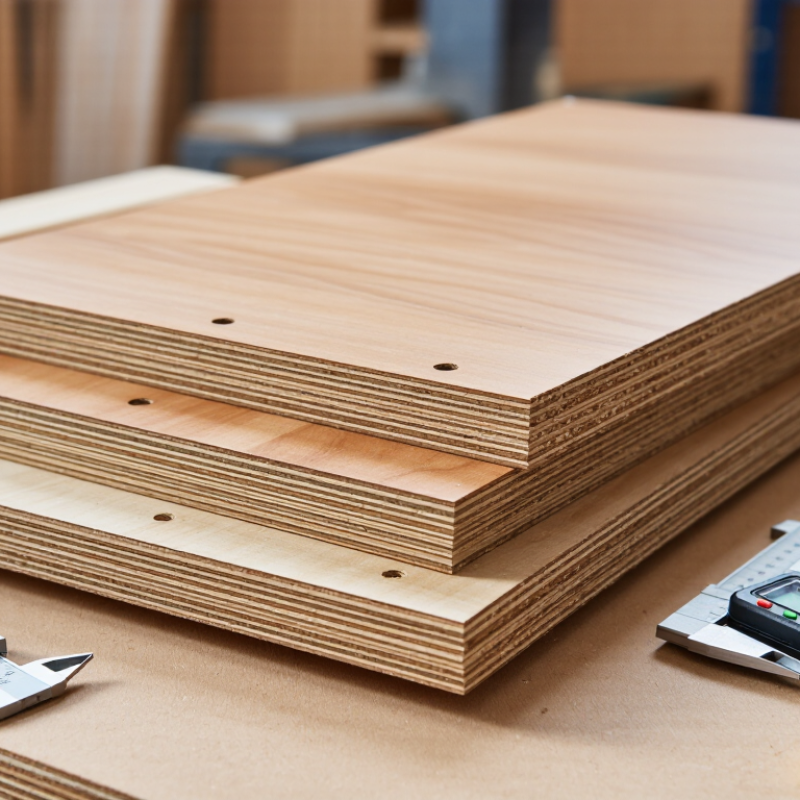
Premium plywood is not a universal legal grade. It usually describes tighter manufacturing control, cleaner veneers, stronger cores, and more consistent thickness. The face looks calmer, with fewer knots, patches, open splits, or color changes. Its inner plies also contain fewer gaps. That matters when a cabinet edge is routed or a panel is cut.
I learned this distinction through workshop testing. A beautiful face veneer did not always mean a stable panel. That shortcut was wrong. Premium plywood should be judged by structure, not appearance alone. The Forest Products Laboratory’s Wood Handbook links plywood performance to veneer quality, grain direction, bonding, moisture, and panel construction. A premium panel normally shows even edges, firm bonding, and minimal thickness variation. Standard plywood may still be useful, but it often accepts more visible repairs and wider production tolerances.
Data adds useful perspective. The Food and Agriculture Organization’s 2022 Forest Products Yearbook reported global plywood production at roughly 190 million cubic metres. Such scale creates wide quality differences between suppliers and grades. For interior projects, check the face grade, core species, formaldehyde documentation, and sanding quality. For humid areas, verify the applicable moisture-resistance classification, rather than trusting the word “premium.” The U.S. Environmental Protection Agency’s TSCA Title VI limits formaldehyde emissions from hardwood plywood to 0.05 parts per million. Ask for test records and chain-of-custody documents when responsible sourcing matters. Small flaws still occur. Inspect every sheet before installation.
What Is Premium Plywood and How Does It Differ from Standard Plywood?
Premium plywood generally offers cleaner face veneers, fewer core voids, more consistent thickness, better sanding, and more reliable adhesive or moisture performance. Standard plywood can still be suitable for many projects, but its appearance, core uniformity, and dimensional consistency may vary. Scores use a typical 1–5 comparison index; actual specifications depend on the plywood grade, manufacturing standard, and intended application.
How Premium Plywood Is Manufactured and Graded
What Is Premium Plywood and How Do You Choose It?
Premium plywood begins with carefully selected veneer sheets. Manufacturers peel or slice logs into thin layers. These veneers are dried to control moisture. Poor drying can create cracks, warping, or weak bonding.
The layers are arranged with alternating grain directions. This cross-grain structure improves strength and dimensional stability. Adhesive is applied between each sheet. Heated presses then bond the stack under controlled pressure. After pressing, panels are trimmed, sanded, and inspected. Premium grades usually have smooth faces, consistent thickness, tight inner plies, and few repaired defects. However, grading systems vary by region and application. A clear surface grade does not always mean a stronger core. This is where buyers often misjudge quality.
Tips: Check the panel edges before buying. Look for gaps, overlapping veneers, or dark glue lines. Hold the sheet flat and inspect both faces under bright light. Ask for the product’s grade, thickness tolerance, moisture rating, and test documentation. For furniture, prioritize a clean face and stable core. For structural work, verify certified performance instead of trusting appearance alone. Some imperfections are normal. A small patch may be harmless, while hidden core voids can cause trouble during cutting or fastening. My practical rule is simple: compare several panels from the same batch, because one attractive sheet may not represent the whole production run.
Key Qualities to Examine Before Buying Premium Plywood
Premium plywood is not simply plywood with a beautiful surface. “Premium” has no universal international grade, so buyers must inspect measurable qualities. Check the veneer face for tight grain, consistent thickness, and minimal patches. Then inspect the cut edge. A strong panel should show dense, even plies with few visible gaps or overlaps.
Core stability matters most in furniture and cabinetry. Ask for the panel’s grade, bonding standard, moisture rating, and formaldehyde test documentation. The U.S. EPA TSCA Title VI limit for hardwood plywood is 0.05 ppm formaldehyde emissions. In addition, FAO’s Global Forest Products Facts and Figures 2022 reports roughly 400 million cubic metres of global wood-based panel production. That scale makes consistent grading essential, not optional.
Tips: Bring a small flashlight and examine the edge from several angles. Tap the sheet lightly; dull, irregular sounds may suggest internal voids. Measure thickness at different points. A premium panel should stay close to its stated size. Check certification numbers independently, because printed claims can be incomplete.
In practice, I have learned not to trust a perfect face alone. Some attractive sheets contain weak cores or uneven glue lines. Moisture can expose those defects later. A panel stored on a damp floor may already be compromised. Look for flatness, dry packaging, clean edges, and traceable test records. APA technical guidance also stresses panel grading and intended-use selection. No single inspection proves everything. Use several small checks before paying a premium.
How to Choose Premium Plywood for Different Projects
Premium plywood is not a universal grade. It is plywood selected for a project’s specific demands. A cabinet door needs a smooth face, stable veneers, and clean edges. A workbench top needs stiffness and reliable screw-holding strength. The USDA Forest Products Laboratory’s Wood Handbook reports that interior wood commonly reaches about 6–12% moisture content, depending on humidity. Choose panels stored near the project’s final environment.
For furniture, inspect the face veneer under direct light. Look for flat grain, tight joints, and minimal core gaps along a cut edge. ANSI/HPVA HP-1 classifies hardwood plywood by face and back appearance, helping buyers compare visual quality. However, a beautiful face does not guarantee a stable panel. I have seen attractive sheets warp after one humid season. Check thickness tolerance, veneer direction, and whether the core matches the machining plan.
For kitchens, bathrooms, or covered outdoor work, select a panel rated for humid or exterior exposure. EN 636 divides plywood into service classes for dry, humid, and exterior conditions. Confirm the adhesive classification, not just the word “water-resistant.” For structural shelves, compare stiffness and span data using the APA Engineered Wood Construction Guide. For children’s furniture or enclosed rooms, review formaldehyde emissions documentation under applicable indoor-air standards. Keep the panel supported during transport. Premium plywood still bends when stored poorly. A small sample cut can reveal voids, uneven layers, and disappointing glue lines before the full sheet becomes expensive waste.
How to Store, Cut, and Maintain Premium Plywood Properly
Premium plywood is made from carefully selected veneers, balanced grain, and strong bonding. Its smooth surface supports clean furniture, cabinets, and interior panels. Quality still depends on storage and handling. Even excellent plywood can warp when exposed to moisture or uneven support.
Store sheets flat on three or more level supports. Keep them raised from concrete floors, where moisture can travel upward. Leave space around the stack for air movement. Avoid direct sunlight, heaters, and open windows. Before cutting, let the plywood adjust to the room for at least 48 hours. Check both faces for bowing, swelling, or loose veneer. A small defect can change the cut.
Use a fine-tooth blade and support the sheet close to the cutting line. Cut with the finished face positioned correctly for your tool. Mark lightly; deep pencil lines can remain visible. Seal exposed edges with a suitable finish, especially near sinks or damp areas. Clean dust with a soft brush, not a wet cloth. I have seen careful projects fail because one panel rested on a crooked support. That mistake is easy to miss.
Tips: Measure twice, and cut once. Keep blades sharp. Wear eye protection and a dust mask. Wipe spills quickly. Inspect stored sheets every few weeks, because small bends may become permanent. Still, no storage method is perfect; local humidity can surprise even experienced woodworkers.
