
Skip to Content
chevron-left chevron-right chevron-up chevron-right chevron-left arrow-back star phone quote checkbox-checked search wrench info shield play connection mobile coin-dollar spoon-knife ticket pushpin location gift fire feed bubbles home heart calendar price-tag credit-card clock envelop facebook instagram twitter youtube pinterest yelp google reddit linkedin envelope bbb pinterest homeadvisor angies

What Is Sheet Stock Stained Glass and How Is It Used?

Sheet Stock Stained Glass begins with a simple material: a flat sheet of colored, textured, or opalescent glass. Artisans cut it into measured pieces. They then join those pieces with copper foil, lead came, or another compatible system. The finished panel can become a window, lampshade, cabinet insert, room divider, or small decorative object.

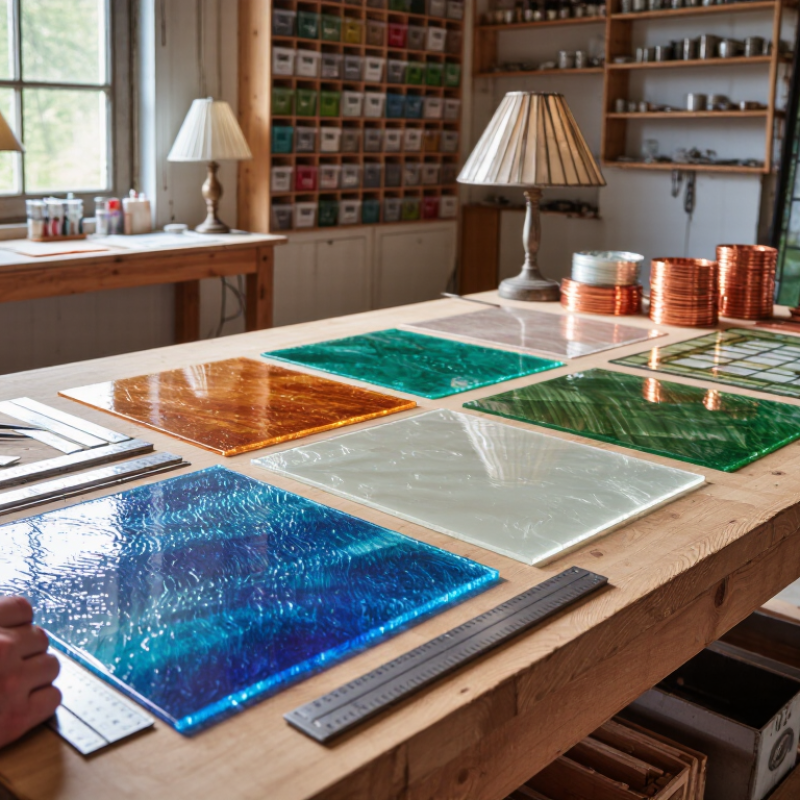
The term is not perfectly standardized. Some suppliers use it for full-size architectural sheets. Others include smaller hobby sheets and kiln-compatible glass. That difference matters. Thickness, texture, transparency, and firing behavior affect every design decision. A clean blue sheet may transmit daylight softly. A rippled amber sheet may scatter it across a wooden table. Practical handling also matters. Cutting requires controlled pressure, eye protection, and careful edge treatment.

Industry evidence supports the material’s continuing relevance. Grand View Research’s 2024 Flat Glass Market Size report identifies construction and interior applications as important demand areas. The U.S. Geological Survey’s Mineral Commodity Summaries also shows industrial sand’s central role in glass manufacturing. Meanwhile, the U.S. Bureau of Labor Statistics continues tracking glaziers as a skilled occupational group. These reports do not measure Sheet Stock Stained Glass directly. That limitation deserves attention.

Stained-glass designer William Morris wrote, “Have nothing in your houses that you do not know to be useful, or believe to be beautiful.” His principle fits this craft well. A successful sheet selection should serve both purposes. It must work technically. It should also reward the eye. The following guide explains what Sheet Stock Stained Glass is, how makers choose it, and where beginners often misjudge the material.
What Is Sheet Stock Stained Glass and How Is It Used?

Definition and Characteristics of Sheet Stock Stained Glass

What Is Sheet Stock Stained Glass and How Is It Used?

Definition and Characteristics of Sheet Stock Stained Glass

Sheet stock stained glass is flat glass manufactured in sheets for cutting, shaping, and decorative assembly. It may be transparent, translucent, or opaque. Its surface can appear smooth, rippled, hammered, streaked, or lightly textured.

Color usually comes from mineral compounds added during glass production. Texture changes how light travels through each piece. A cobalt-blue sheet may cast cool shadows, while amber glass can warm a nearby wall. Some sheets contain bubbles, cloudy areas, or uneven color. These features are often intentional, but they can vary between sections.

Artists select sheet stock by checking color, thickness, texture, and light transmission. Holding a sample near a window helps reveal its true character. Cutting requires a clean score and controlled pressure. A poor score may create a wandering break. I have found that textured surfaces can make scoring less predictable. That is part of the material’s charm, though it also demands patience.

After cutting, pieces may be joined with copper foil, lead came, or suitable glass adhesives. Common applications include window panels, cabinet inserts, lampshades, mirrors, mosaics, and small decorative objects. Edges must be handled carefully because freshly cut glass is sharp. Eye protection, stable work surfaces, and proper ventilation support safer practice. The final appearance depends on both the glass and the light surrounding it.

Types of Glass Sheets and Their Common Properties

Sheet stock stained glass is made in flat panels, usually about 2–4 millimeters thick. Artisans cut these sheets into shapes, then join them with copper foil or lead came. The sheet’s type controls light, color, texture, and cutting behavior.

Transparent glass passes strong daylight and keeps painted details visible. Cathedral glass creates clean, jewel-like color. Opalescent glass scatters light and appears milky, which can hide solder lines or uneven backgrounds. Textured sheets add ridges, pebbles, or waves. They distort views and soften harsh sunlight. Iridescent surfaces reflect shifting colors, but they can look different under cloudy skies.

Thickness matters. Thicker pieces feel stronger, but they may require deeper scoring pressure. Texture also changes the cut; straight patterns can disguise small errors. A useful caution.

Thermal expansion deserves attention. Adjacent sheets should have compatible expansion behavior before kiln work or fused assemblies. ASTM C1036 establishes requirements for flat glass, while ASTM C1048 addresses heat-treated products. These standards support quality checks, but they do not guarantee a successful craft result. Handling still matters.

The U.S. Department of Energy estimates that windows can account for roughly 25–30% of residential heating and cooling energy use. Stained glass is rarely the main insulation layer. Designers often place it inside a protective window system. In practice, color choice becomes a balance between appearance and solar comfort. Dark reds absorb noticeable heat. Pale textures scatter more light. I still find “maximum transparency” overrated in private spaces. A little distortion can create better privacy and atmosphere.

What Is Sheet Stock Stained Glass and How Is It Used?

Sheet stock stained glass is manufactured in flat panels that can be cut, shaped, and assembled for windows, lamps, mosaics, and decorative panels. The chart shows representative thickness ranges commonly encountered in stained-glass work.

Common properties: Cathedral glass is usually transparent and transmits strong light. Opalescent glass is translucent to opaque and diffuses light. Textured glass has patterned surfaces that provide privacy and visual distortion. Clear float glass is uniform and transparent, while mirror sheet is reflective and generally used for decorative accents. Actual thickness varies by supplier, color, texture, and intended application.

Tools and Materials Needed for Stained Glass Projects

Sheet stock stained glass is flat, colored glass supplied in individual sheets. It may be smooth, rippled, translucent, or heavily textured. Each sheet becomes a small visual piece in a window, lamp, panel, or decorative box. The tools determine whether that piece looks intentional or accidentally wounded.

A basic setup needs a glass cutter, running pliers, grozing pliers, pattern shears, and a stable cutting surface. A grinder can refine edges, but wet grinding is preferable because it controls glass dust. You also need copper foil or lead came, solder, flux, a temperature-controlled soldering iron, and a cleaning solution. Safety glasses are not optional. Tiny shards travel farther than expected. My first cutting mat was too small, and the broken edges proved it.

Ventilation matters during soldering. OSHA’s lead standard sets an eight-hour permissible exposure limit of 50 micrograms per cubic meter for airborne lead. Use local exhaust ventilation, wash hands before eating, and keep food away from the workbench. NIOSH also recommends controlling dust at its source, making wet grinding a practical choice. Avoid dry sweeping. A damp cloth works better. Flux residues can corrode finished work, so rinse and dry them carefully. The final material choice still deserves reflection: lead came offers structural strength, while copper foil supports lighter, more detailed designs but demands steadier solder control.

What Is Sheet Stock Stained Glass and How Is It Used? - Tools and Materials Needed for Stained Glass Projects

Data Dimension Information Typical Use in a Project Tools or Materials Needed Important Considerations
Definition Sheet stock stained glass is manufactured glass supplied in flat sheets that can be selected, cut, shaped, and assembled into decorative or functional panels. Used as the individual colored, textured, or transparent pieces that form a stained glass design. Pattern, glass cutter, cutting oil, running pliers, grozing pliers Each sheet may vary in color, texture, transparency, and thickness, so the actual glass should be inspected before cutting.
Common Glass Appearance Transparent Opalescent Textured Streaked Iridescent Transparent glass allows light to pass through, while opalescent and textured glass can provide softer light and visual detail. Color chart, sample pieces, light source, design sketch Texture and directional patterns can affect how a piece should be oriented in the design.
Thickness Many stained glass sheets are approximately 3 mm thick, although thickness can vary by type and manufacturing process. Used for small suncatchers, decorative panels, lampshades, ornaments, and other projects designed for compatible glass pieces. Glass cutter, pattern shears, foil or lead came sized for the glass Measure the glass and choose a compatible assembly method; mismatched thickness can make fitting and soldering more difficult.
Pattern Preparation A full-size design is divided into numbered pieces, with allowances added when using copper foil or lead came. Creates a guide for selecting glass, transferring shapes, and maintaining the intended proportions. Paper pattern, ruler, pencil, permanent marker, pattern shears Number both the pattern pieces and the corresponding glass pieces to reduce assembly errors.
Glass Cutting A carbide or similar wheel cutter scores the surface; controlled pressure is then used to separate the glass along the score. Turns a sheet into smaller pieces that follow the shapes in the pattern. Glass cutter, cutting oil, safety glasses, flat work surface A score is a continuous controlled line, not a deep groove. Do not cut glass without eye protection.
Shaping and Fitting Small amounts of glass can be removed or refined after cutting to improve the fit between neighboring pieces. Helps create clean joints and reduces gaps before foiling or leading. Running pliers, grozing pliers, glass grinder, water, sponge Do not force pieces together. Tight pressure can cause cracking or unwanted stress in the glass.
Copper Foil Method Each glass piece is wrapped with adhesive-backed copper foil, then the foiled edges are soldered together. Suitable for intricate shapes, small pieces, curved designs, and projects requiring visible solder lines. Copper foil, burnishing tool, soldering iron, solder, flux, brush, damp sponge The foil should be centered consistently on the glass edges and firmly burnished before soldering.
Lead Came Method Glass pieces are fitted into channels formed by strips of lead came, which are joined at their intersections. Often used for larger panels or designs with straighter, more structured sections. Lead came, came knife, fid, horseshoe nails, soldering iron, solder, flux Lead came requires careful handling and good hygiene. Keep food and drinks away from the work area and wash hands after use.
Soldering Solder is melted with a heated soldering iron to join copper-foiled seams or selected came intersections. Builds a continuous joint and adds structural support to the assembled panel. Soldering iron, solder, flux, iron stand, heat-resistant work surface Use ventilation, keep the hot iron on its stand when not in use, and follow the safety instructions for the solder and flux.
Cleaning Flux residue should be removed after soldering because it can leave a corrosive or dull surface residue. Improves the appearance of solder lines and prepares the project for optional finishing. Warm water, mild cleaner, soft brush, clean cloth, protective gloves Dry the project thoroughly and handle sharp edges carefully during cleaning.
Finishing Optional finishing may include applying patina to solder lines, polishing the surface, and adding hanging hardware. Provides a selected metal appearance and allows the finished piece to be displayed. Patina suitable for the solder, polish, cloth, hanging chain or wire, eye protection Test finishing products on scrap material first and follow the product safety directions.
Workspace Requirements A stable, level, well-lit work surface with enough room for the pattern and tools. Supports accurate cutting, fitting, soldering, and safe storage of glass pieces. Cutting mat or protected board, task lighting, storage trays, brush and dustpan Keep the floor and work surface free of glass fragments. Never pick up shards with bare hands.
Core Safety Equipment Eye protection, closed-toe shoes, suitable gloves for handling sharp pieces, and adequate ventilation. Reduces exposure to glass fragments, sharp edges, heat, fumes, and workshop debris. Safety glasses, protective apron, heat-resistant surface, ventilation system Use separate hygiene practices when working with materials that may contain lead, and keep children and pets away from the workspace.
Project Suitability Sheet stock glass is commonly suited to decorative panels, suncatchers, lampshades, ornaments, mirrors, and framed artwork. Allows a flat design to be converted into a light-catching or decorative assembled object. Project pattern, selected glass, assembly method, finishing supplies For architectural glazing or load-bearing applications, use materials and construction methods specifically rated for that purpose.

General note: Stained glass is sharp and soldering equipment becomes extremely hot. Work in a controlled area, use appropriate protective equipment, and follow the safety instructions supplied with every tool and material.

Step-by-Step Process for Cutting and Assembling Glass

What Is Sheet Stock Stained Glass and How Is It Used?

Sheet stock stained glass begins as flat, colored glass panels. Each sheet may contain streaks, bubbles, or subtle changes in transparency. These irregularities create character, but they also affect cutting. In workshop practice, I inspect the surface under angled light before marking any pattern. My first cuts are rarely perfect. That is useful feedback.

Print or draw the design at full scale, then create a numbered paper template. Place each template on the glass, allowing space for the cutting line. Hold the cutter upright, apply steady pressure, and score once. Do not retrace the line. Use running pliers to open the score gently, then refine small edges with grozing pliers or a glass grinder. Wear eye protection. Tiny chips travel farther than expected.

After cleaning the pieces, arrange them on the pattern board. Copper foil or lead came can hold the sections, depending on the design and workshop method. Tack the joints carefully before soldering every seam. Keep the assembly flat. OSHA’s Lead Standard sets an action level of 30 micrograms per cubic meter and an exposure limit of 50 micrograms over eight hours, so ventilation, hygiene, and protective procedures matter when lead materials are present. The U.S. Consumer Product Safety Commission also limits lead in children’s products to 100 parts per million, a useful reminder when designing accessible decorations. Some edges may still need adjustment. That is normal.

Common Uses, Benefits, and Safety Considerations

Sheet Stock Stained Glass: Common Uses, Benefits, and Safety Considerations

Sheet stock stained glass is flat, colored glass supplied in workable panels. Artists score it, break it, and assemble the pieces into windows, lamps, cabinet doors, mosaics, and small architectural details. Textures scatter daylight; translucent colors soften hard interior shadows. That visual control is its main benefit. Yet every sheet has limits. Thickness, surface texture, and firing history affect cutting, fitting, and final strength.

Material efficiency can be practical. A maker can replace one damaged piece instead of rebuilding an entire panel. Offcuts also become borders, ornaments, or test pieces. However, stained glass is not automatically energy-efficient. The U.S. Department of Energy’s Energy Saver guidance states that windows may account for 25–30% of a building’s heating and cooling energy use. A decorative panel may need a sealed secondary window or protective glazing. That detail is often overlooked.

Safety deserves equal attention. OSHA’s Eye and Face Protection guidance cites about 2,000 U.S. workplace eye injuries each day, making rated eye protection essential during scoring, breaking, and grinding. Use cut-resistant gloves, closed shoes, and local ventilation. Never treat fine glass dust as harmless. Keep tools organized, inspect cracks, and lift large sheets with help. A small mistake can become a sharp one. Workshops also need a clear cleanup routine. That is where many otherwise careful projects fail.