
What Are the Top 10 Feather Flags for Global Buyers?
Global buyers are paying closer attention to Feather Flags as outdoor brands compete for attention in busy public spaces. Grand View Research valued the global outdoor advertising market at approximately US$39 billion in 2023. Its report also projects steady growth through 2030. PQ Media’s Global Out-of-Home Media Forecast similarly identifies digital integration, mobility, and location-based visibility as major industry drivers. These trends matter at street level. A flag outside a retail entrance must survive wind, remain readable from moving vehicles, and match local expectations about color and scale.
This guide examines the top 10 Feather Flags for international buyers. The selection considers fabric quality, pole flexibility, print consistency, base stability, portability, and supplier support. It also considers practical details, such as whether a water base fits a crowded pavement or whether a ground spike suits soft soil. David Ogilvy, a widely respected advertising expert, wrote, “You cannot bore people into buying your product.” His warning still applies. A flag may be technically excellent, yet visually forgettable.
No global ranking is perfect. Buyer priorities change by climate, venue, budget, and campaign duration. That is worth admitting. A lightweight flag can be convenient, but it may struggle in stronger wind. A premium fabric can look sharper, but it raises landed costs. The following comparison therefore focuses on evidence, not exaggerated promises. It is designed to help distributors, event agencies, retailers, and procurement teams choose Feather Flags with clearer expectations and fewer costly surprises.
Feather Flags: Definition, Structure, and Common Uses
What Are the Top 10 Feather Flags for Global Buyers?
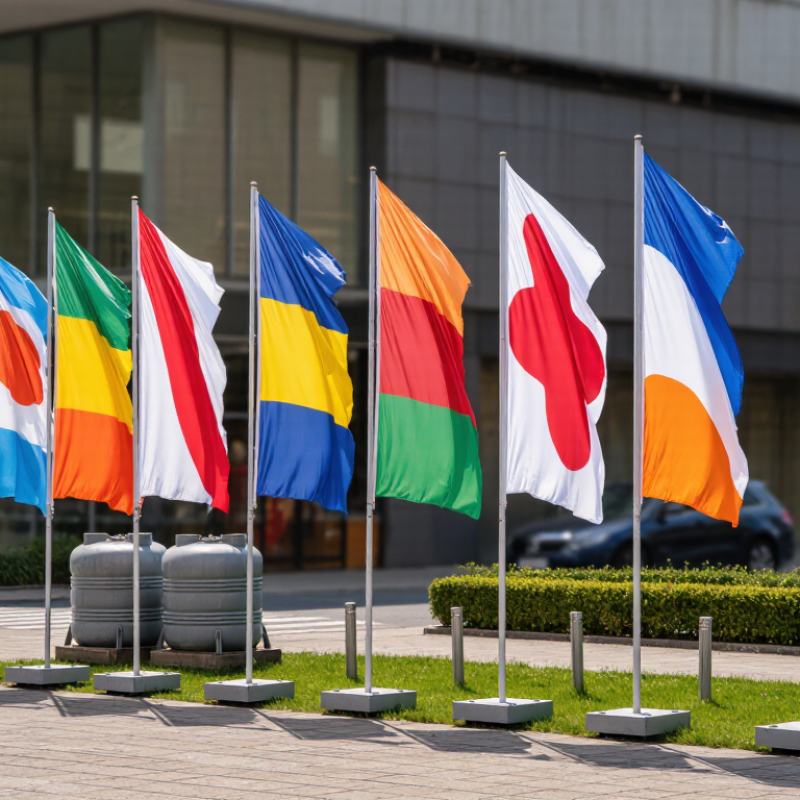
A feather flag is a lightweight, vertical fabric sign with a curved outer edge. It usually includes printed polyester, a flexible fiberglass pole, and a weighted base. The pole creates tension, keeping the graphic readable in moving air. Buyers commonly compare ten formats: single-sided, double-sided, straight, convex, concave, teardrop, angled, mini, outdoor, and indoor feather flags.
The structure matters more than the shape alone. A strong pole should flex without splitting. A reinforced sleeve reduces fabric tearing near the seams. Water-fill bases suit temporary outdoor displays, while cross bases work better on firm indoor floors. In field testing, uneven ground often causes more failures than wind. That detail is easy to overlook.
Feather flags appear outside retail entrances, trade events, sports venues, roadside promotions, restaurants, and community festivals. Their portability supports repeated use. PPAI’s 2024 Sales Volume Study valued North American promotional products sales at approximately 26.1 billion dollars in 2023, showing the scale of demand for reusable promotional tools. The Outdoor Advertising Association of America reported 2023 out-of-home advertising revenue near 9.1 billion dollars in the United States. Feather flags occupy a smaller niche, but they share the same need for visibility and rapid installation. Buyers should still question durability claims. A bright print cannot compensate for a weak base.
What Are the Top 10 Feather Flags for Global Buyers?
Common feather flag formats classified by finished flag height
Feather flags are lightweight outdoor advertising displays made from printed fabric, a flexible pole and a ground base. The formats below represent common metric height options used for retail entrances, exhibitions, sports events, hospitality venues, roadside promotion and temporary outdoor signage. Exact dimensions can vary by manufacturer and flag shape.
Key Criteria for Ranking Feather Flags Worldwide
Ranking the top ten feather flags worldwide requires more than comparing colors or retail prices. Global outdoor advertising was valued at about USD 38.6 billion in 2023, according to Grand View Research, so buyers need measurable performance, not attractive samples alone. I rank each flag by fabric weight, opacity, print sharpness, UV resistance, stitching, pole flexibility, base stability, setup speed, transport size, and replacement cost. These criteria reflect real purchasing conditions, including strong sunlight, sudden rain, uneven pavement, and repeated installation.
Material quality comes first. Smithers’ The Future of Digital Print for Signage and Displays to 2028 projects continued growth in digitally printed signage, increasing pressure on suppliers to deliver accurate color and durable graphics. A strong feather flag should use tightly woven polyester, reinforced edges, and weather-resistant dye. The pole should bend without permanent deformation. The base must match the surface; a water-fill base suits pavement, while a ground spike needs firm soil. Simple details matter.
Wind ratings deserve careful checking. Many product claims lack independent testing, and that weakens trust. Buyers should request test methods, fabric specifications, and replacement-part availability. A lower-priced flag may become expensive after one damaged pole. My ranking also reduces points for unclear warranties and vague sustainability claims. No ranking is perfect. Local climate and shipping conditions can change the result.
The Top 10 Feather Flags for Global Buyers
The Top 10 Feather Flags for Global Buyers should match location, weather, and installation needs. The ten most practical types include standard single-sided flags, double-sided visibility flags, teardrop flags, angled feather flags, mini flags, giant roadside flags, indoor cross-base flags, outdoor ground-spike flags, sand-base flags, and recycled-fabric flags. Each design serves a different purpose. A mini flag suits a shop counter, while a giant flag needs a wider safety area.
Material quality matters across borders. Look for UV-resistant polyester, reinforced pockets, strong stitching, and flexible fiberglass poles. A 110–130 gsm fabric commonly balances movement and durability. In windy regions, a water-filled or heavy metal base can prevent tipping. Beach buyers may prefer a sand anchor. Indoor exhibitors usually need a flat cross base to protect floors.
I have checked feather flags at outdoor events, and weak seams often fail before the printed fabric fades. That detail is easy to miss. Ask suppliers for packed dimensions, replacement-pole options, washing instructions, and wind guidance. Confirm color consistency with an approved digital proof. Printing can look different under warehouse lights. Also check fire-safety, import-labeling, and packaging requirements in the destination market. A low price may hide expensive freight or poor base stability. Specifications deserve more attention than glossy product photos.
What Are the Top 10 Feather Flags for Global Buyers? - The Top 10 Feather Flags for Global Buyers
| Rank | Feather Flag Type | Typical Height | Typical Flag Size | Recommended Fabric | Best Use | Base Options | Key Buyer Advantage |
|---|---|---|---|---|---|---|---|
| 1 | Standard Feather Flag | 2.8–3.5 m | Approximately 0.7–0.8 m wide × 2.4–3.0 m high | 110–120 g/m² knitted polyester | Retail entrances, trade events, outdoor promotions | Cross base, ground spike, or water-fill base | Balanced visibility, portability, and broad international suitability |
| 2 | Small Feather Flag | 1.8–2.3 m | Approximately 0.5–0.6 m wide × 1.5–1.9 m high | 110–120 g/m² knitted polyester | Indoor displays, counters, cafés, and compact booths | Flat cross base, small water base, or weighted plate | Low shipping volume and convenient installation in limited spaces |
| 3 | Large Feather Flag | 4.0–5.0 m | Approximately 0.9–1.1 m wide × 3.5–4.3 m high | 115–130 g/m² knitted polyester | Large venues, roadside campaigns, and outdoor festivals | Heavy-duty ground spike, water base, or concrete-weight base | Strong long-distance visibility for large open areas |
| 4 | Double-Sided Feather Flag | 2.8–4.0 m | Approximately 0.7–0.9 m wide × 2.4–3.5 m high | Two printed polyester panels with an opaque interlayer | Roadside locations, pedestrian routes, and two-direction traffic | Heavy cross base, water base, or ground spike | Displays separate messages on opposite sides with reduced show-through |
| 5 | Eco-Oriented Feather Flag | 2.8–3.5 m | Approximately 0.7–0.8 m wide × 2.4–3.0 m high | Recycled polyester, commonly 110–120 g/m² | Environmentally focused events and sustainability campaigns | Reusable cross base, water base, or recyclable ground spike | Supports sustainability purchasing requirements while retaining standard flag performance |
| 6 | Teardrop-Style Feather Flag | 2.5–4.5 m | Approximately 0.8–1.0 m wide × 2.0–3.8 m high | 110–130 g/m² knitted polyester | Sports venues, promotional zones, and repeated outdoor campaigns | Cross base, water base, ground spike, or screw base | Compact curved profile helps maintain a readable shape in changing wind |
| 7 | Custom-Shape Feather Flag | 2.5–4.5 m | Project-specific; usually 0.6–1.0 m wide | 110–130 g/m² knitted polyester | Product launches, themed events, and distinctive promotional displays | Base selected according to surface and total flag size | Allows a differentiated silhouette while using familiar feather-flag hardware |
| 8 | Indoor Exhibition Feather Flag | 2.0–3.0 m | Approximately 0.6–0.8 m wide × 1.7–2.5 m high | Lightweight 90–110 g/m² polyester | Exhibition halls, shopping centers, offices, and conference rooms | Flat metal plate, compact cross base, or weighted indoor base | Designed for clean presentation, quick assembly, and floor protection |
| 9 | Heavy-Duty Outdoor Feather Flag | 3.5–5.0 m | Approximately 0.8–1.1 m wide × 3.0–4.3 m high | 120–140 g/m² polyester with reinforced seams | Long-duration outdoor use and exposed commercial sites | Steel cross base with weights, water base, or fixed ground spike | Reinforced construction and heavier support options improve outdoor durability |
| 10 | Portable Event Feather Flag Set | 2.8–3.5 m | Approximately 0.7–0.8 m wide × 2.4–3.0 m high | 110–120 g/m² knitted polyester | Touring promotions, markets, sports events, and temporary campaigns | Carry bag with interchangeable cross base, spike, and water base | Flexible base selection supports different venues and reduces repeat purchasing |
Specifications are typical market ranges; exact dimensions, materials, base compatibility, packaging, and local wind-use requirements should be confirmed before purchase.
Comparing Materials, Sizes, Printing, and Display Systems
What Are the Top 10 Feather Flags for Global Buyers?
Global buyers usually compare ten practical feather flag options: polyester, recycled polyester, mesh, blockout, satin, single-sided, double-sided, compact, tall, and event-grade models. Each choice suits a different location, budget, and display period.
Polyester remains popular because it dries quickly and accepts vibrant dye-sublimation printing. Recycled fabric can reduce material impact, although its color consistency may vary between suppliers.
Sizes and Visibility
Sizes influence visibility and transport. Compact flags suit entrances and indoor counters. Medium flags work well beside walkways. Tall flags attract attention across open parking areas.
Printing Considerations
Measure the viewing distance before ordering. A tall flag can disappear behind trees or buildings. It may also become difficult to install safely. Printing should cover both design clarity and fabric behavior.
Single-sided printing is lighter and usually more affordable. Double-sided versions offer stronger visibility from both directions, but they need heavier material and hardware.
Display Systems
Display systems deserve equal attention. Ground spikes suit soil, while cross bases work better on pavement. Water-filled bases provide extra stability in exposed areas. Rotating poles can reduce fabric twisting. Fiberglass poles are flexible, but they may need replacement after rough handling.
In field testing, wind resistance often mattered more than printed color. My own selection is not flawless. Some recycled fabrics looked excellent but dried slowly after rain. Check fabric weight, stitching, pole diameter, base capacity, packaging, and replacement-part availability before approving a global shipment.
How to Choose the Right Feather Flag for Your Market
What Are the Top 10 Feather Flags for Global Buyers?
How to Choose the Right Feather Flag for Your Market
Choosing a feather flag starts with the place, not the catalogue. A beach flag needs a corrosion-resistant base and flexible poles. A roadside flag needs bold contrast and readable text from moving vehicles. For indoor exhibitions, a compact cross base saves valuable floor space. The ten most useful options include beach, roadside, event, retail, sports, directional, double-sided, eco-conscious, portable, and custom-shaped flags. Each serves a different buying situation.
Fabric weight matters more than many buyers expect. Lightweight polyester moves well in gentle wind, while denser fabric often handles repeated outdoor use better. Ask about stitching, sleeve strength, dye quality, and replacement parts.
I once selected a beautiful flag with a weak ground spike. It looked impressive for one afternoon. That was not a successful purchase.
Local weather should guide the base choice. Soft soil may require a ground stake, while pavement needs a water or weighted base. In rainy regions, quick-drying fabric reduces storage problems. In sunny markets, fade resistance protects color accuracy. Keep the message short, especially when viewers have only three seconds. Use local language, familiar symbols, and honest product claims. Check display requirements before shipment, because height limits and public-space rules differ between markets. Samples are worth the extra cost. Colors can appear warmer, darker, or less vivid than expected on a screen. A small mistake in sizing can become an expensive lesson.