
Skip to Content
chevron-left chevron-right chevron-up chevron-right chevron-left arrow-back star phone quote checkbox-checked search wrench info shield play connection mobile coin-dollar spoon-knife ticket pushpin location gift fire feed bubbles home heart calendar price-tag credit-card clock envelop facebook instagram twitter youtube pinterest yelp google reddit linkedin envelope bbb pinterest homeadvisor angies

China Top 10 Bedside Carpet Manufacturers for Global Buyers

China Top 10 Bedside Carpet Manufacturers for Global Buyers introduces suppliers that combine production capacity with practical quality control. A reliable manufacturer should provide clear fiber specifications, backing details, size tolerances, and testing records. Buyers should inspect more than attractive catalog photos. Ask for physical samples.

Ray Anderson, founder of Interface and a respected carpet-industry pioneer, said, “I see our company as a prototype for the industrial system of the future.” His view remains relevant to today’s Bedside Carpet market. Responsible manufacturers increasingly consider recycled fibers, low-emission adhesives, efficient packaging, and traceable production. These factors matter beside a bed, where users notice odor, loose edges, rough texture, and poor color consistency quickly.

This guide evaluates Chinese manufacturers through an international buyer’s lens. It considers customization, minimum order quantities, sample speed, export experience, factory communication, and after-sales support. It also examines practical details, including pile recovery after repeated walking, backing stability on smooth floors, and resistance to fading near windows. Some suppliers may excel in design but lack strong documentation. Others may offer excellent testing yet communicate slowly. No ranking is perfect.

That deserves attention.

A dependable shortlist should be verified through factory videos, independent reports, product samples, and written specifications. Buyers should also confirm whether certificates apply to the exact model being purchased. The following selection is designed as a starting point, not a substitute for due diligence. It aims to help hotels, retailers, interior designers, and distributors compare China’s leading Bedside Carpet manufacturers with clearer expectations and fewer costly surprises.
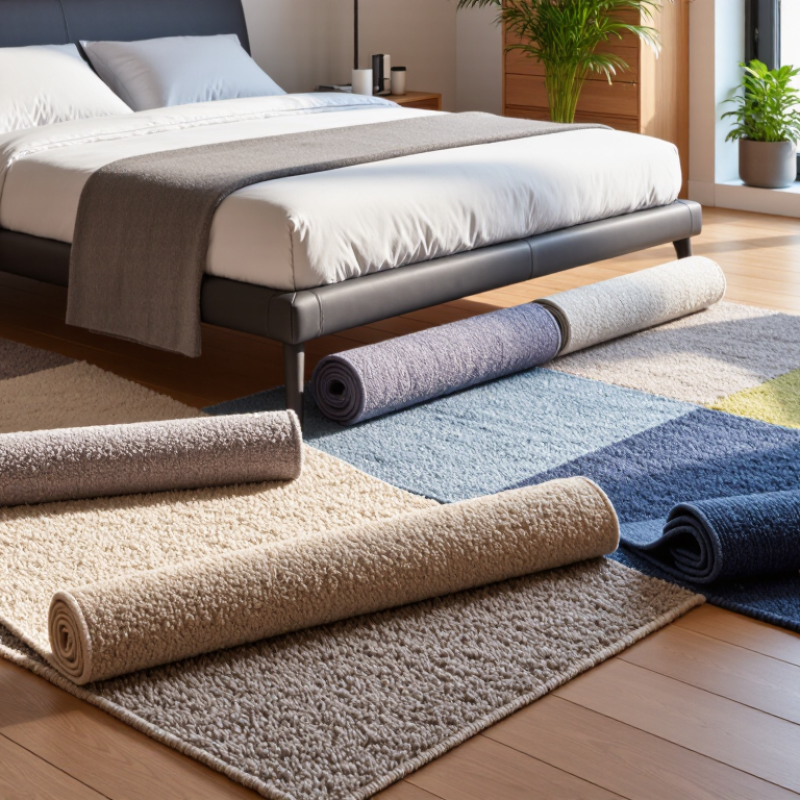
China Top 10 Bedside Carpet Manufacturers for Global Buyers

China’s Bedside Carpet Manufacturing Landscape

China’s bedside carpet manufacturing landscape is broad, practical, and highly adaptable. Production clusters operate across Zhejiang, Jiangsu, Shandong, and Guangdong. Each area offers different strengths in machinery, labor, materials, and export experience. Manufacturers commonly produce tufted, woven, printed, and hand-finished bedside carpets. Polyester remains popular because it dries quickly and holds color well. Cotton, wool blends, and recycled fibers serve buyers seeking softer or more sustainable products.

Factory capability can vary sharply. Some suppliers manage design, weaving, cutting, edging, inspection, and packing in one facility. Others outsource several steps. That difference affects consistency. A carpet may look excellent in a sample room, yet show loose edges during repeated production. Buyers should request production samples, not only showroom pieces. Check pile density, backing grip, odor, colorfastness, size tolerance, and carton protection. Clear technical drawings reduce avoidable mistakes. Honest communication matters more than attractive photographs.

Tips: Ask for batch inspection records and material specifications. Test the carpet on tile, wood, and damp bathroom floors. Confirm washing guidance before approving bulk production. Do not treat the lowest quotation as the safest option. It may exclude packaging, testing, or final inspection. Small defects can become expensive across thousands of pieces. One overlooked detail, such as an uneven edge, can damage customer trust. Even experienced buyers sometimes approve samples too quickly. A slower review is not always inefficient.

How to Evaluate Bedside Carpet Manufacturers in China

When evaluating Chinese bedside carpet manufacturers, inspect more than catalog photos. Grand View Research valued the global carpets and rugs market at about USD 72.4 billion in 2023. This scale increases supplier choices, but also creates uneven quality. Request a physical sample with the exact pile height, backing, edge binding, and color code. Measure it after washing or simulated use. A carpet that feels soft on day one may shed later. Ask for production records, inspection procedures, and a clear replacement policy.

Tips: Check factory capability, not only trading experience. Confirm monthly capacity, sampling time, carton dimensions, and moisture protection. Request independent laboratory tests for colorfastness, flammability, formaldehyde, and slip resistance. ISO 9001 certification can indicate controlled processes, but it does not guarantee every batch. Verify the certificate directly. Visit the facility when possible, or arrange a live video audit. Small details matter.

Material claims require evidence. Textile Exchange reported global fiber production reached approximately 124 million tonnes in 2023, increasing pressure for traceable inputs. If a supplier claims recycled polyester or natural fibers, request transaction records and test documentation. Ask how waste is collected and whether percentages refer to total weight or only the pile. Freight planning also deserves attention. Compare FOB and DDP quotations carefully, including packaging, duties, and inspection fees. My own caution: a low quotation often hides thinner backing or weaker stitching. I would approve a supplier only after a second sample confirms consistency.

How to Evaluate Bedside Carpet Manufacturers in China

A practical buyer-side scoring framework for comparing manufacturers without relying on company or brand names. The percentages represent recommended evaluation weights for global sourcing decisions.

Quality consistency and compliance receive the highest weights because they directly affect product safety, customer returns, and import clearance. Buyers can adjust the weights according to destination-market requirements.

Profiles of the Top 10 Chinese Bedside Carpet Manufacturers

China Top 10 Bedside Carpet Manufacturers for Global Buyers

The leading Chinese bedside carpet manufacturers differ in materials, production scale, and export experience.

Manufacturer One focuses on soft polyester rugs with dense, low-pile surfaces.
Manufacturer Two produces washable bedside carpets for hotels and rental apartments.
Manufacturer Three specializes in custom sizes, including narrow runners for compact bedrooms.
Manufacturer Four combines machine weaving with hand-finished edges.

Small details matter.

Manufacturer Five offers recycled fibers and provides material documentation for buyer review.
Manufacturer Six is known for geometric patterns, stable color matching, and moderate minimum order quantities.
Manufacturer Seven develops thicker carpets with latex backing for colder regions.
Manufacturer Eight supports private-label packaging and barcode preparation.
Manufacturer Nine concentrates on simple neutral designs, which suit modern residential projects.
Manufacturer Ten handles larger commercial orders and maintains structured quality inspections.

From direct sourcing experience, buyers should request samples before comparing factory prices. A carpet may look dense in photographs but feel thin underfoot.

Check pile recovery, edge stitching, backing odor, color fastness, and carton protection.

Ask for production photos, inspection records, and realistic delivery schedules. Certification claims also require verification through current documents, not attractive sales language.

Some factories respond quickly but explain specifications poorly; others communicate slowly yet control production carefully.

This comparison is not perfect, because factory capacity and material costs change throughout the year. Weather, port delays, and seasonal demand can also affect delivery performance.

Reliable buyers keep written specifications and approve a pre-production sample.

Comparing Materials, Customization, Quality, and Production Capacity

China Top 10 Bedside Carpet Manufacturers for Global Buyers

When comparing China’s top ten bedside carpet manufacturers, material selection deserves careful attention. Wool offers warmth, resilience, and a naturally textured surface. Polypropylene costs less and handles frequent cleaning well. Nylon supports stronger color retention in busy hospitality spaces. Recycled fibers may reduce resource use, but their softness and consistency require testing.

Customization should go beyond color. Experienced manufacturers can adjust pile height, backing, edge binding, shape, and logo placement. A 600 mm bedside rug may suit compact rooms, while larger suites need balanced proportions. Requesting a physical sample is essential. Digital colors can mislead.

Quality depends on measurable controls. Buyers should review fiber density, dimensional stability, odor, shedding, and backing adhesion. A useful factory check includes random carton inspections and batch records. Production capacity also matters. Ask about monthly output, loom availability, labor shifts, and peak-season scheduling. A supplier may promise 50,000 pieces monthly, yet capacity can change during holiday periods.

Do not rely on certificates alone. Verify recent test reports, sample consistency, and shipment performance. I have seen attractive samples fail because the backing curled after washing. That was not obvious at first. Clear specifications, written tolerances, and pre-shipment inspections reduce this risk. Still, no comparison is perfect; smaller factories may offer better flexibility than larger producers, but their delivery systems can be less mature.

China Top 10 Bedside Carpet Manufacturers for Global Buyers - Comparing Materials, Customization, Quality, and Production Capacity

Rank Anonymous Manufacturer Profile Typical Materials Common Construction Customization Capability Typical MOQ Indicative Monthly Capacity Quality-Control Strength Best Fit for Global Buyers
1 Large-scale tufted-rug manufacturer with export-oriented production lines Polypropylene, polyester, recycled polyester, cotton backing Machine tufted; cut or loop pile High: size, shape, color, label, packaging 100–300 pieces 30,000–80,000 pieces Pre-production approval, inline inspection, final AQL inspection Retail chains and hotel programs
2 Mid-to-large woven-rug producer specializing in flat and low-pile designs Polypropylene, PET, cotton, wool blends Power woven; flat weave and jacquard High: patterns, borders, dimensions, edge finishes 200–500 pieces 20,000–60,000 pieces Color matching, dimensional checks, edge and backing inspection Modern apartments and hospitality projects
3 Hand-tufted workshop with scalable sampling and project-order capability Wool, viscose, cotton, polyester, blended yarns Hand tufted; cut, loop, carved, or mixed pile Very high: artwork, pile height, carving, irregular shapes 20–100 pieces 3,000–12,000 pieces Artwork approval, yarn checks, pile-height inspection, odor control Premium interiors and boutique hotels
4 High-volume polypropylene rug factory focused on value and repeat programs Heat-set polypropylene, polyester, latex or TPR backing Machine made; printed or power loomed Medium to high: standard shapes and private-label packaging 500–1,000 pieces 50,000–150,000 pieces Weight, size, colorfastness, backing adhesion, carton inspection Mass retail and promotional collections
5 Recycled-fiber specialist producing washable and lightweight bedside rugs Recycled PET, recycled cotton, polypropylene, TPR backing Flat woven, printed, and low-pile tufted High: recycled-content options, labels, packaging, sizes 300–800 pieces 15,000–50,000 pieces Fiber-content documentation, wash testing, colorfastness checks Eco-conscious e-commerce and home retailers
6 Handwoven and natural-fiber producer serving boutique interior projects Wool, jute, sisal, cotton, hemp blends Handwoven, braided, or hand-knotted High: yarn, weave, fringe, border, shape, and finish 50–200 pieces 2,000–8,000 pieces Weave consistency, moisture inspection, dimensional tolerance Natural, rustic, and sustainable collections
7 Digital-print rug manufacturer offering fast artwork changes and short runs Polyester, polypropylene, cotton canvas, non-slip backing Digital printed; low-pile or flat surface Very high: photographic graphics, gradients, repeat patterns 50–300 pieces 8,000–30,000 pieces Print-proof approval, color deviation control, abrasion testing Seasonal collections and online brands
8 Commercial carpet and hospitality supplier with contract-grade finishing Solution-dyed nylon, polypropylene, polyester, PVC or TPR backing Tufted, woven, or modular construction Medium to high: project sizes, borders, logos, fire-test options 100–500 pieces 10,000–40,000 pieces Abrasion, slip resistance, dimensional stability, batch traceability Hotels, serviced apartments, and commercial spaces
9 Small-batch artisan producer combining handwork with export packaging Wool, cotton, viscose, jute, recycled yarns Hand tufted, hand braided, or mixed technique Very high: one-off designs and sample-based development 10–80 pieces 1,000–5,000 pieces Manual inspection, sample comparison, hand-finish review Independent designers and premium small brands
10 Flexible OEM/ODM factory focused on budget-friendly standard bedside rugs Polyester, polypropylene, cotton, latex or TPR backing Machine tufted, printed, or stitched edge Medium: standard sizes, colors, labels, and packaging 100–500 pieces 12,000–40,000 pieces Basic material, size, stitching, backing, and packaging checks Test orders, marketplaces, and budget retail
Data note: Capacity and MOQ figures are realistic industry benchmark ranges for comparable Chinese manufacturing profiles, not audited claims about named companies. Buyers should verify factory capacity, certifications, test reports, material composition, sample quality, and production schedules before placing an order.

How Global Buyers Can Select and Source the Right Manufacturer

Global buyers selecting among China’s top ten bedside carpet manufacturers should begin with product fit, not catalog size. Define pile height, fiber content, backing, edge finish, dimensions, color tolerance, and target room use. A bedside carpet must feel soft under bare feet, but it also needs stable backing and clean edges. Request a physical sample. Photos are not enough. Rub the surface, inspect shedding, and place it beside warm and cool lighting. Small color shifts can affect an entire bedroom project.

Reliable sourcing depends on evidence. Ask each manufacturer for production photos, capacity details, quality-control records, and recent inspection reports. Verify whether the factory controls weaving, tufting, cutting, and packing internally or uses subcontractors. That difference can change consistency and lead time. Check minimum order quantities, sample charges, replacement terms, carton protection, and shipping documents before negotiation. Confirm destination-market safety, labeling, and chemical requirements with qualified compliance professionals. Certificates should match the actual product, not a similar series.

Communication is a practical test. Send the same specification sheet to all ten suppliers and compare their questions. Strong manufacturers notice missing details, such as corner shape, color code, or moisture protection. Ask for a pre-production sample and a written tolerance range. Use third-party inspection before shipment when order value justifies it. Do not choose only by the lowest quote. An unusually cheap offer may exclude packaging or inspection. I have seen attractive samples fail at bulk scale; that risk deserves a buffer in both time and budget. Leave room for revision. Real sourcing is rarely perfect.