Skip to Content
chevron-left chevron-right chevron-up chevron-right chevron-left arrow-back star phone quote checkbox-checked search wrench info shield play connection mobile coin-dollar spoon-knife ticket pushpin location gift fire feed bubbles home heart calendar price-tag credit-card clock envelop facebook instagram twitter youtube pinterest yelp google reddit linkedin envelope bbb pinterest homeadvisor angies

What Is the Best Leather Sofa Manufacturer in China?

Choosing the best leather sofa manufacturer in China requires more than comparing showroom photos or factory prices. A reliable decision begins with evidence: material records, production experience, quality procedures, and customer feedback. The right supplier should explain leather grades clearly, rather than using vague terms such as “top quality.”

A professional manufacturer can show how hides are selected, cut, stitched, and finished. Look closely at the sofa’s grain, seam alignment, cushion support, and frame construction. Small details matter. For example, consistent stitching and firm edge support often reveal stronger workmanship. Ask about kiln-dried wood, foam density, leather thickness, and testing standards. Factory audits, product samples, and transparent inspection reports can also support a more trustworthy evaluation.

However, no manufacturer is flawless. A polished showroom may hide weaknesses in communication, packaging, or after-sales service. Samples can look excellent while large orders reveal uneven color or loose stitching. That risk deserves attention. Buyers should compare production capacity, customization ability, export experience, lead times, and warranty terms before signing an agreement. Independent inspections may add cost, but they can prevent expensive surprises later.

This guide examines leading Chinese leather sofa manufacturers through practical criteria. It considers craftsmanship, material consistency, factory capability, certifications, service quality, and overall value. The goal is not to promote the cheapest supplier. It is to identify a dependable partner that can deliver comfortable, durable leather sofa products with fewer compromises. Pricing matters, but lasting performance matters more.
What Is the Best Leather Sofa Manufacturer in China?

What Defines the Best Leather Sofa Manufacturer in China?

What Defines the Best Leather Sofa Manufacturer in China?

The best leather sofa manufacturer is not defined by price alone. It combines material control, skilled production, clear communication, and consistent quality. A reliable factory should explain where its leather comes from and how it is finished. Full-grain, top-grain, and corrected leather should never be described vaguely. Ask for proof.

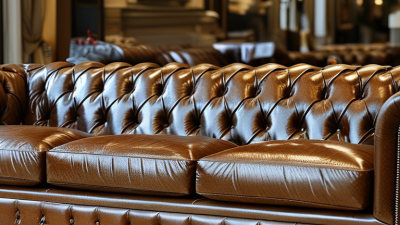
Experienced buyers also examine leather thickness, surface texture, color consistency, and odor. A strong sample should feel soft but not weak. Its stitching should remain even around corners, cushions, and armrests. Small flaws matter. They often reveal larger quality-control problems.

The frame deserves equal attention. Kiln-dried hardwood, reinforced joints, and tested support systems improve long-term stability. Foam density should match the sofa’s intended use, not just its showroom appearance. A professional manufacturer can provide material specifications, inspection records, production photos, and packaging details. It should also explain how defects are handled after delivery.

Factory experience matters, but old equipment can create uneven results. Modern machinery helps, yet trained workers still make critical decisions. This balance is easy to overlook. A practical evaluation includes a factory audit, a pre-production sample, and an inspection before shipment. The most dependable supplier welcomes these steps instead of avoiding difficult questions. Pricing remains important, but unusually low quotes may hide thinner leather, weaker foam, or rushed assembly. Reliability is built through evidence, not confident promises.

How to Evaluate Leather Quality, Craftsmanship, and Product Design

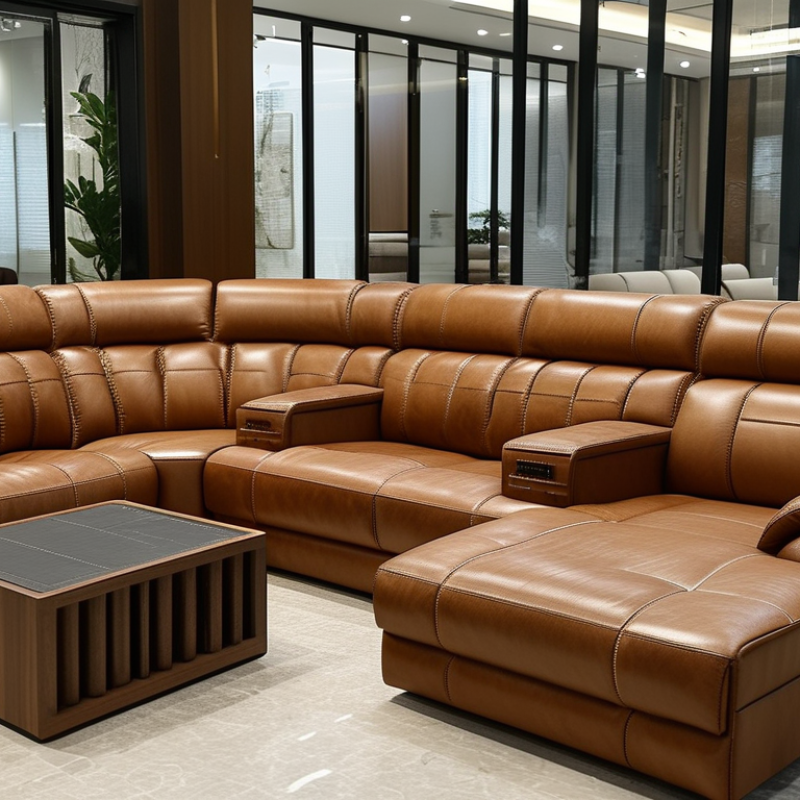
Choosing the best leather sofa manufacturer in China requires more than comparing catalog prices. Leather quality should be checked through a physical sample, not only photographs. Look for an even grain, natural pores, and consistent color across cushions. Full-grain leather usually develops character, while heavily corrected leather may hide surface weaknesses. Ask for the leather’s thickness, finishing method, and test records. Reliable manufacturers should explain these details clearly.

Craftsmanship appears in quiet places. Inspect stitching around corners, piping, zipper alignment, and the underside of each cushion. Seams should remain straight after repeated sitting tests. A strong frame, resilient foam, and properly fixed webbing affect comfort for years. Product design also matters. Measure seat depth, arm height, and cushion firmness for the intended room. A beautiful sofa can still feel awkward. One lesson from factory inspections is simple: a perfect showroom sample can mislead when production controls are weak. Ask to review current production photos or approve a pre-shipment sample.

Tips: Request leather swatches under daylight. Rub one area with a clean cloth. Check the frame warranty and foam density. Compare two finished samples, not just two quotations. Leave room for doubt. That caution often reveals more than polished sales language.

Which Manufacturing Standards and Certifications Matter Most?

The best leather sofa manufacturer in China should prove quality through standards, not polished photographs. A current ISO 9001 certificate shows a controlled quality system, but it does not guarantee perfect upholstery. Ask for its scope, issuing body, and latest audit date. ISO 14001 can indicate better environmental management, while ISO 45001 reflects workplace safety practices.

Product testing matters more. Request reports for frame strength, seat durability, recliner cycles, and flammability. EN 12520 and EN 12521 are useful references for domestic seating safety and strength in many markets. Importers may also need requirements such as California TB117-2013 or destination-specific chemical limits. Leather should have clear records for restricted substances, dye stability, thickness, and surface finish. These details prevent unpleasant surprises, such as color transfer onto pale clothing.

Inspect the factory process directly, or use an independent audit. Check kiln-dried timber moisture, hidden joinery, foam density, stitching tension, and carton drop-test results. Ask whether each production batch has a traceable code. A certificate can be genuine yet irrelevant to your exact sofa model. That is an easy mistake. Sample approval should include leather swatches, seam photos, measured dimensions, and a written defect standard. Some suppliers may resist this level of detail. That response itself deserves careful thought.

What Is the Best Leather Sofa Manufacturer in China? — Which Manufacturing Standards and Certifications Matter Most?
Evaluation Dimension Relevant Standard or Certification What It Verifies Evidence to Request from a Manufacturer Importance How to Interpret the Result
Quality management ISO 9001:2015 A documented quality-management system covering processes such as purchasing, production control, inspection, corrective action, and continual improvement. A current certificate, certification scope, issuing certification body, validity dates, and confirmation that the scope covers furniture or upholstered sofa production. High Useful for evaluating process consistency, but it does not by itself prove superior leather quality or sofa durability.
Environmental management ISO 14001:2015 A structured environmental-management system for identifying environmental impacts, meeting applicable obligations, and improving environmental performance. A valid certificate and scope showing that the relevant factory site and manufacturing activities are included. Medium–High Indicates systematic environmental management; it is not the same as a guarantee of low emissions or sustainable materials.
Worker health and safety ISO 45001:2018 An occupational health and safety management system addressing workplace hazards, risk controls, incident investigation, and worker participation. A current certificate, factory-site scope, audit status, and evidence of risk assessments for cutting, sewing, adhesive use, foam handling, and assembly. Medium–High Provides evidence of a formal safety system, but actual factory conditions should still be checked through an audit.
Leather material identity ISO 17131:2020 Microscopy-based identification of leather and imitation leather, helping distinguish genuine leather from coated or synthetic materials. Independent laboratory reports identifying the leather type, together with the supplier’s material specification and lot information. High Important when product descriptions use terms such as full-grain, top-grain, corrected-grain, split leather, or bonded leather.
Leather performance ISO 11640:2018 Color fastness of leather to cycles of rubbing, commonly used to assess transfer or color change during use. Test reports identifying the leather finish, test method, dry and wet rubbing results, sample reference, and laboratory details. High Higher resistance to color transfer is particularly relevant for light-colored clothing, frequent-use seating, and commercial interiors.
Leather finish durability ISO 11644:2022 Adhesion of the finish to leather, indicating how well the surface coating is bonded to the leather substrate. Laboratory results for finish adhesion on the exact leather finish and color intended for production. High Helps assess the risk of peeling, flaking, or premature surface failure, but should be combined with abrasion and flexing tests.
Leather chemical safety REACH Regulation (EC) No 1907/2006 European Union controls on the registration, evaluation, authorization, and restriction of chemicals, including restricted substances in articles. A recent third-party restricted-substances report covering dyes, coatings, plasticizers, heavy metals, azo colorants, and other substances relevant to the target market. High Relevant for products sold into the European market; a general declaration is weaker than a product-specific laboratory report.
Formaldehyde and indoor emissions ISO 16000 series and applicable destination-market requirements Methods used to measure indoor-air pollutants and emissions from furniture components, coatings, adhesives, foam, and composite materials. Chamber-test reports for the complete sofa or representative material assembly, including volatile organic compounds and formaldehyde where applicable. High Complete-product or assembly testing is more informative than testing leather alone because foam, adhesives, wood, and coatings can contribute to emissions.
Structural safety EN 12520:2015 Safety, strength, and durability requirements for domestic seating, including relevant load and durability tests. Test reports for the exact frame, mechanism, configuration, and upholstery specification proposed for production. High A strong indicator for residential sofa durability, but the test configuration must match the actual commercial model.
Non-domestic seating performance EN 16139:2013, where applicable Strength, durability, and safety requirements for non-domestic seating used in environments such as hospitality, offices, and public areas. Testing that states the applicable use category, load level, product configuration, and test sequence. High for contract use More appropriate than a domestic-seating standard when the sofa will be placed in hotels, restaurants, offices, or other commercial settings.
Flammability compliance Destination-market requirements, such as California TB 117-2013 or applicable UK/EU contract rules Resistance to ignition or smoldering for specified upholstery components, depending on the market and product construction. Test reports for the complete tested material combination, including leather, filling, barrier materials, thread, and backing where required. High Flammability rules vary by country and end use; a report for one upholstery assembly cannot automatically be applied to another.
Responsible forestry claims FSC Chain of Custody certification Traceability of certified forest-based materials through the supply chain. A valid certificate and transaction or claim documentation for any certified wood used in frames, panels, or packaging. Medium Relevant when certified wood content is specified; it does not certify leather, foam, metal, or overall factory quality.
Supply-chain traceability Batch and lot traceability system Ability to link finished sofas to leather hides, foam batches, frame materials, hardware, operators, inspection records, and shipment details. Sample material codes, incoming-inspection records, production travelers, final-inspection reports, and a documented recall or corrective-action procedure. High Often more practical than a logo or certificate when investigating color variation, odor, defects, or warranty claims.
Factory quality control Documented inspection plan Defined inspection points for dimensions, stitching, leather grading, color consistency, seams, frame assembly, foam density, mechanisms, appearance, and packaging. Incoming, in-process, and final inspection checklists; acceptance criteria; defect classification; inspection sampling method; and corrective-action records. High A manufacturer with clear acceptance criteria is easier to manage than one relying only on final visual inspection.
Pre-shipment verification Independent inspection against approved samples Confirmation that production matches the approved specification before shipment, including quantity, dimensions, materials, workmanship, labeling, and packaging. A signed inspection report, photographs, defect summary, carton measurements, and comparison with the approved golden sample. High Provides order-specific evidence and reduces the risk of relying solely on general factory certificates.
Certification credibility Accredited or independently verifiable certification body Whether a management-system certificate can be verified and whether the certification body operates within a recognized accreditation framework. Certificate number, online verification record, accreditation details, audit scope, issue date, expiry date, and covered production location. High Certificates should be checked for authenticity, correct legal entity, correct factory address, and relevant scope before they influence supplier selection.

Practical conclusion: the strongest manufacturer evaluation combines independently verified certificates, product-specific laboratory testing, factory-process evidence, traceability records, and an inspection of the exact sofa configuration. No single certification proves that a manufacturer is the best choice for every market or application.

How Do Pricing, Customization, and Production Capacity Compare?

When comparing Chinese leather sofa manufacturers, price should be read as a specification, not a headline number. A low quote may use corrected leather, thinner foam, or a simpler internal frame. Ask for a componentized quotation covering leather grade, foam density, hardware, packaging, and delivery terms. A practical sample review should include seam alignment, cushion recovery, odor, and frame noise after repeated sitting. These small checks often reveal more than a showroom finish. Details matter.

Customization changes both price and production risk. Standard dimensions and catalog colors usually move faster and cost less. Custom seat depth, channel stitching, unusual hides, or integrated charging require new patterns, testing, and approval samples. Request a material swatch, CAD drawing, color code, and signed sample before bulk production. Some suppliers promise nearly unlimited options; that sounds attractive, but it can weaken quality control. A narrower menu may produce a more consistent sofa.

Production capacity should be measured beyond factory size. Review monthly output, sewing-line staffing, cutting equipment, curing space, inspection records, and current order load. Ask how the factory handles peak seasons and replacement parts. A supplier making 2,000 sofas monthly may still miss deadlines if one workshop serves many customers. Confirm lead times for samples, first production, and replenishment separately. Keep a realistic buffer. Even experienced buyers can overvalue polished samples. I would inspect one finished shipment, because packaging corners may arrive crushed despite excellent paperwork. That gap deserves attention.

This benchmark compares typical Chinese OEM leather sofa supplier profiles. Larger manufacturers generally offer lower unit pricing and higher monthly output, while smaller and mid-scale factories often provide more flexible customization. Prices are indicative export ranges for a standard three-seat leather sofa and may vary by leather grade, design, order quantity, packaging, and delivery terms.

What Should Buyers Check Before Choosing a Chinese Manufacturer?

Choosing the best leather sofa manufacturer in China requires more than comparing prices.

Buyers should verify production experience, material control, and testing records. China’s General Administration of Customs reported furniture and parts exports of about US$73.3 billion in 2023. That scale shows strong manufacturing capacity, but it does not guarantee consistent quality.

Ask for leather grading documents, hide-origin details, and a physical sample. Check whether the grain, color, and stitching match across cushions. Request foam density reports and frame moisture readings.

For durability, review test results based on EN 12520 or equivalent standards. CSIL’s World Furniture Outlook 2024 continues to identify China as the leading global furniture producer. Still, production volume alone can hide weak inspection systems. This is where buyers often become too optimistic.

Tips:

Visit the factory, not only the showroom. Compare the approved sample with a random finished sofa. Confirm inspection checkpoints, warranty terms, packaging tests, and replacement procedures in writing.

A reliable manufacturer should explain rejection rates and corrective actions clearly. Ask for recent third-party audit reports, but verify the issuing laboratory. Some documents look professional yet provide little useful evidence.

Check dates, test models, and product codes carefully. Also inspect leather under natural light; showroom lighting can conceal uneven grain, loose edges, or color variation.