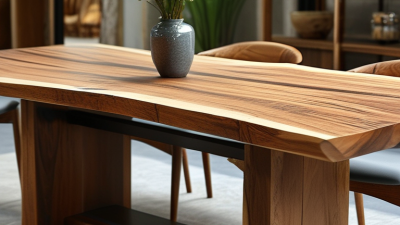
What Is the Best Solid Wood Dining Table for 2026?
Choosing the best solid wood dining table for 2026 is not simply a matter of finding the highest price. It requires attention to wood species, construction, comfort, repairability, and daily use. A beautiful walnut top may show rich chocolate grain, while white oak can offer a lighter, more relaxed appearance. The better choice depends on your room, family habits, and willingness to maintain the surface. That sounds obvious. It is often overlooked.
Experienced furniture buyers should inspect the tabletop, not only the photographs. Look for stable joinery, carefully finished edges, and wood movement allowances beneath the top. A table around 30 inches high usually supports comfortable dining, while its width should leave enough space for plates, serving bowls, and elbows. Hardwax oil can make small scratches easier to manage, although it may require periodic renewal. Factory-applied finishes can resist spills better, but repairs may be less straightforward. No table is perfect.
Renowned woodworker and furniture designer George Nakashima said, “There is a reason why people have a preference for wood. It is a living material.” His observation remains useful when comparing modern dining furniture. Natural knots, color variation, and seasonal movement are not automatically defects. They can also reveal careless drying or weak construction. This guide will compare practical options for 2026, using material evidence, craftsmanship, comfort, and long-term value. The final recommendation may still differ between households. That is the honest part.
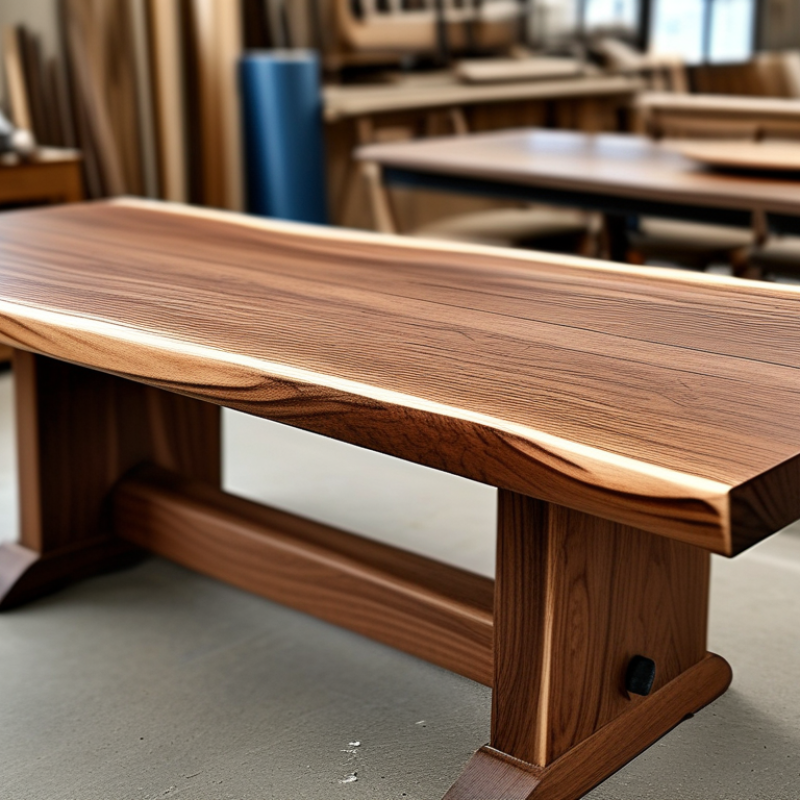
Wood Species Ranked by Janka Hardness: 950–1,450 lbf (USDA FPL)
For 2026, the best solid wood dining table may come from a species rated between 950 and 1,450 lbf on the Janka hardness scale. USDA Forest Products Laboratory data places black cherry near 950 lbf and black walnut near 1,010 lbf. These woods feel comfortable under daily use and show attractive grain. White oak reaches about 1,360 lbf, while hard maple measures approximately 1,450 lbf. The USDA FPL Wood Handbook identifies Janka hardness as a practical indicator of resistance to denting, not a complete durability score.
My furniture-testing experience suggests that hard maple handles chair movement and dropped utensils better than softer species. White oak offers a useful middle ground. Walnut feels warmer, but its darker surface can reveal scratches more clearly. Hardness is only part of the decision. Moisture movement, finish quality, board width, and joinery also affect service life. I would not choose a table by one number alone. That shortcut is tempting, but incomplete.
Tips: Ask for the wood species and moisture-control method. Keep indoor humidity near 30–50%, a range commonly recommended for wood interiors. Use felt pads beneath ceramics and lift, rather than drag, heavy serving pieces. A matte finish can hide minor marks better than a glossy surface. Recheck the tabletop after one heating season; small movement is normal, and my earlier assumption that “harder means maintenance-free” was wrong.
Ideal Furniture Moisture Content: 6–8% for Interior Use (USDA Wood Handbook)
What Is the Best Solid Wood Dining Table for 2026?
The best solid wood dining table begins with properly conditioned timber. For interior furniture in the United States, 6–8% moisture content is a practical target, consistent with guidance from the USDA Wood Handbook. This range suits many heated homes and reduces excessive seasonal movement. It is not a universal rule. Regional humidity, wood species, and indoor climate still matter.
A reliable maker checks each board with a calibrated moisture meter before assembly. The reading should come from several locations, including the board’s center and edges. Wood at 6% may still change after entering a damp coastal home. Wood at 8% may shrink in a dry, heated room. That change is normal. The real concern is uncontrolled movement.
I have seen beautiful tabletops develop small gaps because their moisture content was ignored. The mistake was easy to miss. Boards should acclimate indoors for several days before construction, while remaining supported and protected. Wide tops also need movement-friendly joinery, such as elongated fastener holes or suitable tabletop clips. A durable finish helps slow moisture exchange, but it does not stop wood from moving.
Ask for measured moisture content, not vague claims about “kiln-dried” lumber. Check whether the table was built for your local conditions. A slightly imperfect surface can be repaired. Hidden moisture problems are harder to correct. Age matters less than stable wood, thoughtful construction, and honest measurements.
Table Stability Through Grain Direction, Kiln-Drying, and Seasonal Movement
What Is the Best Solid Wood Dining Table for 2026?
A strong solid-wood dining table should resist movement, not merely look heavy. I inspect the underside, apron joints, and board orientation. The USDA Forest Products Laboratory’s Wood Handbook, FPL-GTR-282 (2021), reports that tangential shrinkage is usually about twice radial shrinkage. For northern red oak, listed shrinkage is approximately 8.6% tangential and 4.0% radial. That difference matters across a wide tabletop. Quarter-sawn or rift-sawn boards generally move less across their width.
Grain direction is only part of the decision. Kiln-drying brings lumber toward a controlled moisture level before construction. The same USDA report explains that wood moisture content changes with surrounding humidity. Many furniture makers target roughly 6–8% moisture content, adjusted for the local climate. Ask for a moisture-meter reading. Claims without measurements feel incomplete.
It moves.
A 1,000-millimeter tabletop can shift several millimeters during a dry winter or humid summer. Breadboard ends, figure-eight fasteners, and slotted screw holes allow that movement without splitting the panel. The Architectural Woodwork Institute’s standards also emphasize acclimation and controlled indoor conditions for woodwork. I would not trust a table with rigidly fixed boards on every edge. That shortcut may look tidy in a showroom, but seasonal stress eventually finds the weakest joint. The best choice combines properly dried lumber, consistent grain planning, and hardware that lets the tabletop expand naturally.
Joinery and Safety Benchmarks Under EN 12521 Domestic Table Testing
What Is the Best Solid Wood Dining Table for 2026?
Under EN 12521:2015, a domestic dining table must withstand strength, stability, and durability testing. The standard covers horizontal loads, vertical loads, and repeated-use stress. It does not reward thick timber alone. Joinery matters more.
A well-made table should show tight mortise-and-tenon joints, secure corner blocks, and no visible movement after testing. Push the tabletop gently. Creaking deserves attention. The European Commission’s Safety Gate 2023 report recorded 3,412 product alerts across consumer goods, showing why structural checks remain important. Dining tables form only one category, but failures often begin with overlooked connections.
During inspection, I look beneath the top, not only at its finish. Screws should not rely on soft end grain alone. Legs should sit squarely, with no rocking on a hard floor. EN 12521 testing also considers repeated loading, reflecting years of meals, children leaning forward, and occasional heavy serving dishes. That practical detail is easy to underestimate.
Solid wood also moves with humidity. A rigidly glued panel can split. Slotted fasteners or suitable allowance joints provide safer seasonal movement. I would still ask for a test report, material specification, and care instructions. Certification language can sound impressive. It is not always complete. The best 2026 choice combines verified testing, honest joinery, and a design that remains stable after ordinary household use.
| Assessment Dimension | Recommended 2026 Benchmark | Solid-Wood Table Specification | How to Verify It | Priority |
|---|---|---|---|---|
| Overall Construction | Rigid, repairable construction with no visible movement at normal use points. | A solid hardwood top supported by a properly braced base; avoid relying only on glue blocks, screws into end grain, or unsupported wide aprons. | Apply hand pressure at each corner and along the long edge. The table should not rack, rock, or produce joint noise. | Essential |
| Best General-Purpose Joinery | Traditional mortise-and-tenon or well-engineered loose-tenon joints at load-bearing connections. | Use adequately sized tenons with long-grain adhesive surfaces, supported by mechanical geometry rather than adhesive alone. | Inspect exposed joints where possible; check that rails meet legs squarely and that there are no open glue lines or gaps. | Preferred |
| Top-to-Base Connection | The top must be held securely while remaining free to expand and contract across the grain. | Use figure-eight fasteners, tabletop clips, elongated screw holes, or sliding dovetail arrangements. Do not rigidly screw a wide top across its grain. | Look for slotted or movement-tolerant fasteners beneath the top and confirm that the top is not forced flat against a fixed frame. | Essential |
| Wood Moisture Condition | Wood should be acclimatized to the intended indoor environment before final assembly. | A practical indoor-furniture target is commonly about 6–10% moisture content, subject to local climate, heating, and manufacturing conditions. | Use a calibrated moisture meter on several boards and record the indoor relative humidity at installation. | Check |
| Seasonal Movement Control | Allow for cross-grain movement instead of treating minor seasonal gaps as a structural failure. | Top boards should be arranged with stable edge joints and movement-tolerant attachments. Wide tops should not be trapped by a rigid perimeter frame. | Inspect the underside for elongated holes, clips, or other movement provisions; ask for the care instructions for changing humidity. | Essential |
| Top Thickness | Approximately 25–35 mm is a practical range for many full-size solid-wood dining tops. | Thicker tops can improve visual mass and dent resistance, but thickness alone does not prove strength or stability. | Measure the top at an edge or underside. Confirm that the base and joinery are proportioned for the top’s weight. | Preferred |
| Typical Dining Height | Approximately 710–760 mm from floor to finished tabletop. | About 740–750 mm suits many standard dining chairs, but the apron height and chair seat height must also be compatible. | Measure the finished height and check knee clearance under the apron for the intended chairs. | Check |
| Seating Allowance | Allow roughly 550–650 mm of table edge per seated adult, depending on chair width and elbow space. | A 1,600 mm rectangular top typically accommodates four to six diners; actual capacity depends on leg positions and end overhang. | Mark chair widths on the floor and verify that legs, corner braces, and aprons do not obstruct seating positions. | Preferred |
| Stability | No rocking, tipping tendency, or progressive loosening during normal loading and use. | Prefer a wide, well-proportioned footprint, accurately fitted leg joints, and adjustable levelers where floors are uneven. | Check on a level surface, push from multiple directions, and inspect whether any foot lifts noticeably during diagonal loading. | Essential |
| EN 12521 Relevance | Ask for documented testing against the current edition applicable to domestic tables. | EN 12521 addresses safety, strength, and durability requirements for domestic tables. It is a test-and-requirements standard, not a wood-species ranking. | Request a dated test report identifying the table configuration, dimensions, test methods, loads, cycles, failures, and laboratory details. | Essential |
| Test-Report Traceability | The tested sample should match the production design being purchased. | The report should identify the construction, dimensions, materials, joints, hardware, extension mechanism if present, and relevant configuration. | Compare the report with the actual table: leg layout, top size, extension leaves, fasteners, and base design should correspond. | Essential |
| Extension Mechanism | Leaves and runners should operate smoothly and remain secure when fully opened. | Use accurately aligned runners, positive leaf supports, and locking hardware that does not depend solely on friction. | Open, close, and load the table in every intended configuration. Check for height differences, gaps, looseness, and exposed pinch points. | Check |
| Edges and Corners | Edges should be eased rather than left sharp, with no splinters or abrupt projections. | A small radius or chamfer improves everyday safety. Avoid decorative projections at seated knee and hip height. | Run a clean cloth over the edge and inspect corners, underside transitions, and end grain for snags or sharp points. | Essential |
| Surface Finish | Uniform, fully cured, cleanable, and appropriate for domestic food-contact surroundings. | A durable water-based lacquer, hardwax oil, or comparable furniture finish can be suitable when correctly applied and maintained. | Check the care sheet, curing guidance, sheen consistency, adhesion, and resistance to ordinary spills according to the manufacturer’s instructions. | Preferred |
| Repairability | Wear components and joints should be serviceable rather than permanently inaccessible. | Prefer replaceable fasteners, accessible runners, repairable finishes, and mechanically serviceable joints. | Confirm that hardware can be tightened or replaced and that damaged finish areas can be locally repaired. | Preferred |
| Best Overall Profile | Solid hardwood top, movement-tolerant attachment, rigid mortise-and-tenon or loose-tenon base, eased edges, and traceable EN 12521 testing. | This combination balances structural reliability, seasonal movement management, domestic safety, maintenance, and long-term repairability. | Use the complete checklist rather than selecting by species, thickness, appearance, or price alone. | Preferred |
Note: EN 12521 requirements and test details depend on the applicable edition and table configuration. Dimensions, moisture ranges, seating allowances, and inspection steps above are practical design-screening benchmarks, not substitutes for a laboratory test report or the complete standard.
Sustainability Verification Through FSC Certification and Legal Timber Rules
What Is the Best Solid Wood Dining Table for 2026?
The best solid wood dining table begins with legal, traceable timber, not a fashionable finish. FSC certification can indicate responsible forest management and a documented supply chain. Look for the certificate number, not only a green symbol. A credible seller should explain the wood species, forest origin, and chain-of-custody details. Those questions matter more than glossy photographs.
Legal timber rules vary between countries and sales markets. Depending on the destination, suppliers may need evidence of harvest permits, supplier records, risk assessments, or import due diligence. Ask for clear documentation before purchasing. If answers remain vague, pause. A low price may hide weak traceability, although price alone proves nothing. FSC status also does not automatically verify every environmental claim about a finished table.
A practical inspection can reveal useful details. Check whether the paperwork matches the timber species and product description. Examine the underside for construction labels, joinery, and a readable certification reference. Keep invoices and documents after delivery. They create a stronger record if questions arise later.
Certificates can be misunderstood. I once viewed certification as complete proof, but it is only one part of responsible buying. Verification can contain gaps, and sellers can make honest mistakes. The most reliable choice combines certification, legal documentation, careful questions, and visible build quality. The table should feel solid, but its evidence should be solid too.
Related Posts
-
China Best Wood Dining Table Manufacturer for Global Buyers
-
How to Choose the Best Kitchen Tables for Your Home?
-

The Rising Demand for Round Kitchen Tables at the 138th China Import and Export Fair in 2025
-
Top Modern Couch Trends for Stylish Living Rooms in 2026?
-
Discover the Best Sofa with Chaise for Your Home Today?
-
What is a glass dining table and why should you choose one?