Skip to Content
chevron-left chevron-right chevron-up chevron-right chevron-left arrow-back star phone quote checkbox-checked search wrench info shield play connection mobile coin-dollar spoon-knife ticket pushpin location gift fire feed bubbles home heart calendar price-tag credit-card clock envelop facebook instagram twitter youtube pinterest yelp google reddit linkedin envelope bbb pinterest homeadvisor angies

China Best Wood Dining Table Manufacturer for Global Buyers

China has become a major sourcing center for furniture buyers worldwide. Its factories combine engineered production, skilled joinery, and large-scale material purchasing. For global buyers, that combination can reduce lead times and support consistent pricing.

Industry data supports this market importance. Grand View Research reported continued growth in the global home furniture market in 2024, driven by housing development, renovation, and online retail. The CSIL World Furniture Outlook also identifies China as a leading force in global furniture production and exports. These reports show opportunity, but they do not remove purchasing risks. Wood species, moisture control, finishing standards, and packaging quality still require careful verification.

A dependable wood dining table manufacturer should provide clear timber documentation, factory photographs, product specifications, and independent quality checks. Buyers should examine tabletop thickness, edge construction, leg stability, coating performance, and carton protection. Small details matter. A poorly sealed edge may swell during ocean transport.

Susan Inglis, executive director of the Sustainable Furnishings Council, states, “Wood is renewable only when forests are responsibly managed.” Her point is practical, not decorative. Responsible sourcing affects forest protection, buyer reputation, and long-term supply stability.

This guide examines why China attracts international dining furniture buyers. It also considers customization, factory capability, certification, logistics, and after-sales support. Some suppliers appear impressive online but perform unevenly in production. That uncomfortable gap deserves attention. A professional sourcing decision should rely on evidence, not attractive catalogs alone.

China Best Wood Dining Table Manufacturer for Global Buyers

Definition and Role of a Wood Dining Table Manufacturer

China Best Wood Dining Table Manufacturer for Global Buyers

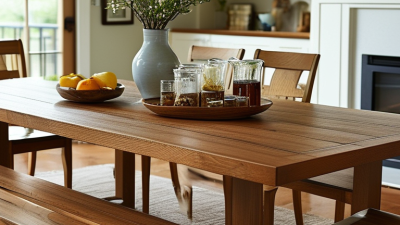
A wood dining table manufacturer does more than cut timber and assemble furniture. It manages material selection, design development, production, quality control, and delivery. For global buyers, the manufacturer connects practical craftsmanship with stable international supply. Experienced teams check wood moisture, grain direction, joint strength, and surface finishing before packaging. These details influence durability, appearance, and customer satisfaction.

In a professional factory, engineers review drawings, dimensions, edge profiles, and table stability. Production staff may use kiln-dried timber, reinforced joints, and protective cartons for long-distance shipping. Reliable manufacturers also provide samples, inspection records, material information, and clear production schedules. This evidence supports better purchasing decisions. However, no manufacturer gets every detail right. A finish may appear warmer under showroom lights, or a small color variation may occur between timber boards. Honest communication matters more than unrealistic promises.

Tips: Request a physical sample before placing a large order. Ask how moisture content is tested. Check the joint structure underneath the tabletop. Confirm packaging details, inspection procedures, and replacement policies. Small flaws matter. A supplier should explain them clearly, not hide them. Buyers should also compare technical documents with the actual product, because attractive photographs cannot prove construction quality.

Key Wood Types and Their Impact on Dining Table Quality

For global buyers, wood species is not a decorative choice; it shapes a dining table’s strength, movement, and service life. Oak offers firm fibers and visible grain, making it suitable for busy family dining rooms. Walnut feels smoother and appears richer, but it usually costs more and marks more easily. Ash is lighter in color and resilient, though its open grain needs careful filling before finishing. Wood tells the story.

In factory inspections, I check moisture content before assembly, not only after the finish is applied. Timber that is too wet may shrink around joints when shipped to a drier climate. That small gap can collect crumbs and weaken the connection over time. Kiln-dried rubberwood can be a practical option, especially when glued panels are properly pressed and sealed. Teak handles moisture well, yet its natural oils can complicate bonding and surface preparation. Species alone is not enough.

Buyers should ask for wood origin, moisture range, panel construction, and finish test details. A solid top may last decades, but poor leg joints can still cause early failure. I have seen attractive grain hide uneven sanding and rushed edge work. That mistake is easy to miss in photographs. Sample approval matters. For export orders, packaging also protects quality; corner guards, dry wrapping, and stable pallets reduce transit damage. A buyer who tests a finished sample will notice these differences before the container leaves the factory.

Key Wood Types and Their Impact on Dining Table Quality

Janka hardness comparison for commonly used dining table woods

Janka hardness indicates a wood’s resistance to denting and everyday wear. Hard maple and white oak generally provide strong durability for high-use dining tables, while black walnut and teak offer a balance of durability, workability, and distinctive appearance. Actual performance also depends on moisture control, joinery, tabletop thickness, and surface finishing.

Data shown in pounds-force (lbf). Values are representative species averages compiled from published wood-property references, including the USDA Forest Products Laboratory Wood Handbook; results may vary by grade, origin, and moisture content.

Design, Customization, and Production Standards

China Best Wood Dining Table Manufacturer for Global Buyers depends on more than attractive design. It requires repeatable customization and disciplined production. A buyer may request a 2,000-millimeter walnut table, rounded corners, and a matte finish. The factory should convert that brief into drawings, moisture targets, hardware details, and an approved sample.

Material control starts with traceable timber records. The FAO’s Global Forest Resources Assessment 2020 reports 4.06 billion hectares of forest worldwide, covering about 31% of global land. This scale makes responsible sourcing essential. Manufacturers should verify species, origin, kiln-drying records, and moisture content before machining. Small gaps matter. A tabletop can warp after shipment if its moisture level does not match the destination climate.

Production standards need measurable checkpoints. The ISO Survey 2022 recorded more than 1.2 million ISO 9001 certificates worldwide, showing how widely documented quality systems are used. For dining tables, practical checks include joint strength, surface flatness, finish adhesion, edge smoothness, and carton compression. Independent inspections can review samples before loading. Still, no system is perfect. Finish shade may vary slightly between wood batches. That limitation should be disclosed, not hidden. Clear tolerances, photo approvals, and inspection records give global buyers stronger control over customized orders.

Quality Control, Certifications, and Sustainable Manufacturing

China Best Wood Dining Table Manufacturer for Global Buyers

Reliable dining table production begins with disciplined quality control. Experienced factories inspect timber moisture before cutting, often targeting stable indoor levels for the destination climate. Skilled teams also check knots, joints, table edges, and surface color under bright workshop lighting. Each table should pass assembly testing before packing. A slightly uneven leg can become a serious problem after shipping.

Certifications add useful evidence, but buyers should verify their scope and validity. ISO 9001 can support consistent production procedures. FSC certification may help confirm responsible forest sourcing when the claim covers the supplied wood. Other documented controls may include formaldehyde testing, coating safety reports, and carton drop tests. Sustainable manufacturing should also reduce offcuts, reuse sawdust where practical, and select water-based finishes. However, no factory is perfect. Waste reduction may remain incomplete, especially during custom orders. Honest reporting is more credible than polished promises.

Tips: Ask for recent inspection records, wood moisture readings, certification documents, and clear photos of packed goods. Request a sample before placing a large order. Check whether the sample matches the final material, finish, hardware, and packaging. Local climate matters too. A table made for a dry region may need different moisture control for humid homes. Clear specifications prevent expensive misunderstandings.

How Global Buyers Evaluate and Select a Reliable Supplier

China Best Wood Dining Table Manufacturer for Global Buyers
How Global Buyers Evaluate and Select a Reliable Supplier

Global buyers should evaluate a wood dining table manufacturer beyond attractive photos and low prices. A reliable supplier explains wood species, moisture control, joinery, finishing, packaging, and production capacity clearly. Ask for recent workshop videos, material samples, inspection records, and references from comparable export projects. A serious factory should also describe how it handles warped panels, color variation, and transit damage. These details reveal practical experience. A polished catalog alone proves very little.

Tips: Request one production sample before placing a large order. Check table stability on an uneven floor. Measure moisture content with an independent inspector when possible. Review drawings, tolerances, payment terms, and replacement procedures in writing. Confirm whether the supplier can maintain quality across repeated orders, not just one impressive sample. Communication matters too. Slow or vague replies may become costly later.

03

Experienced buyers also assess consistency. Compare the approved sample with packed goods, including edge finishing, hardware, carton strength, and protective corners. Ask how the factory traces materials and records inspections. Certifications can support credibility, but they should be verified and matched to the actual product. No supplier is perfect; even a capable manufacturer may struggle with unusual wood textures or seasonal changes. That is why clear expectations and independent checks remain necessary. A reliable partnership grows through evidence, not promises.