
2026 Best Wood Dining Table Suppliers for Global Buyers
Choosing a reliable wood dining table supplier in 2026 requires more than comparing catalog prices. Global buyers need evidence of stable quality, responsible sourcing, accurate specifications, and dependable communication. This guide examines suppliers through practical purchasing concerns, including timber selection, moisture control, joinery, finishing, packaging, and export experience. It also considers whether a supplier can support custom dimensions, private labeling, and consistent production for hospitality or retail projects.
Details matter.
A well-made table should arrive with protected corners, balanced legs, and a finish that matches the approved sample. Buyers should request material descriptions, product photographs, inspection records, and clear lead-time commitments before placing large orders. Certifications may strengthen confidence, but they should be verified rather than accepted as decoration. Supplier reputation also deserves careful review through factory visits, independent inspections, customer references, and small trial orders.
No ranking can fit every buyer.
A family retailer may value flexible customization, while a hotel project may prioritize repeatable dimensions and replacement support. Natural wood varies in grain, knots, and color, even within one batch. That variation is attractive, but it can also create disputes if expectations remain vague. Some supplier information may be incomplete or difficult to compare across countries. Therefore, this overview highlights both strengths and limitations, helping buyers make decisions based on documented performance rather than polished promises. The strongest supplier is not always the cheapest. It is the one that delivers suitable tables consistently, communicates honestly, and responds responsibly when something goes wrong.
What Defines a Reliable Wood Dining Table Supplier in 2026
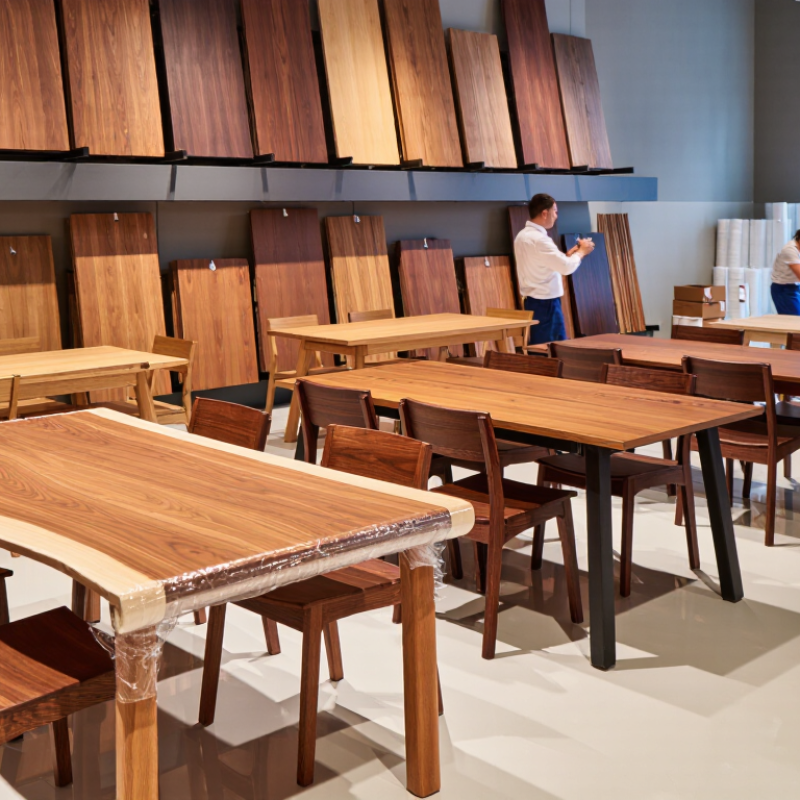
A reliable wood dining table supplier in 2026 must prove quality beyond attractive photographs. Global buyers should request timber species details, moisture readings, finish samples, and clear construction drawings. Kiln-dried wood usually reduces later warping, but storage conditions still matter. Ask how the supplier controls humidity before shipment.
Experienced suppliers explain their joinery instead of hiding behind vague claims. Look for reinforced corners, stable leg connections, smooth table edges, and tested load capacity. A small sample can reveal uneven stain, rough sanding, or weak packaging. It is also useful to review factory inspection records, material traceability, and independent quality reports. These documents do not replace physical checks. They support better decisions.
Reliability also appears in communication. A dependable supplier confirms dimensions, tolerances, carton protection, production timing, and replacement procedures in writing. They should understand destination requirements and provide accurate export documents. Watch the details. Delayed replies often become delayed shipments. Still, no supplier is perfect. Even a careful factory may miss a color difference between batches. Buyers should approve a sealed sample, define acceptable variations, and keep a realistic buffer for production. That extra step feels slow. It often prevents expensive surprises.
2026 Best Wood Dining Table Suppliers for Global Buyers - What Defines a Reliable Wood Dining Table Supplier in 2026
| No. | Reliability Dimension | Recommended 2026 Benchmark | Evidence Global Buyers Should Request | Suggested Weight | Why It Matters |
|---|---|---|---|---|---|
| 1 | Legal and traceable timber | Documented origin for all wood inputs, with chain-of-custody records linking raw material to finished tables. | Species name, country or region of harvest, supplier invoices, delivery records, risk assessment, and valid FSC or PEFC documentation where applicable. | 18% | Supports responsible sourcing and helps buyers meet import, customs, and due-diligence obligations. |
| 2 | Moisture control | Target moisture content commonly around 8–12% for indoor furniture, adjusted for the destination climate and construction method. | Pre-shipment moisture reports, calibrated meter records, kiln-drying procedures, and an agreed inspection method. | 14% | Reduces the risk of warping, cracking, joint opening, and dimensional movement after delivery. |
| 3 | Structural performance | Design and construction should be verified through applicable furniture safety and strength testing; no critical joint or load-bearing defect should be accepted. | Independent test reports, product specifications, load-test results, joint drawings, and corrective-action records. | 16% | Helps ensure safe daily use, consistent durability, and fewer warranty claims. |
| 4 | Quality management | Documented inspection plan covering incoming timber, machining, assembly, finishing, packaging, and final release. | Quality manual, inspection checklists, batch records, defect classification, calibration records, and ISO 9001 certification if available. | 12% | Shows that quality is controlled by a repeatable system rather than visual inspection alone. |
| 5 | Finish and chemical compliance | Finishes must be suitable for the intended market and supported by current laboratory test results for applicable restricted substances and emissions requirements. | Finish technical data sheets, safety data sheets, laboratory reports, formaldehyde or VOC test results, and applicable market declarations. | 10% | Protects end users and reduces regulatory, odor, and indoor-air-quality risks. |
| 6 | Production capacity and consistency | Capacity statements should be supported by monthly production records, stable lead-time performance, and an approved pre-production sample. | Production schedule, capacity plan, sample approval record, order history, on-time delivery data, and contingency planning. | 10% | Helps buyers maintain consistent supply during seasonal demand or large retail programs. |
| 7 | Packaging and export readiness | Export packaging should protect corners, surfaces, and joints; wood packaging material must comply with ISPM 15 when the rule applies. | Packaging specification, drop or transport test results, container-loading plan, carton markings, and ISPM 15 treatment records for solid-wood packaging. | 8% | Lowers transit damage, customs delays, moisture exposure, and unloading problems. |
| 8 | Environmental performance | Measured use of certified or controlled timber, legal waste handling, efficient material yield, and a documented environmental improvement plan. | Certification scope, material balance, waste records, energy or emissions data, recycled-content evidence, and environmental policies. | 6% | Supports buyer sustainability reporting and reduces exposure to greenwashing claims. |
| 9 | Commercial transparency | Clear quotation showing product specifications, tooling or sampling costs, trade terms, payment schedule, warranty, and validity period. | Formal quotation, pro forma invoice, Incoterms® 2020 selection, warranty terms, price-adjustment rules, and documented change-control process. | 3% | Makes total landed cost and contractual responsibilities easier to compare. |
| 10 | After-sales responsiveness | Written procedure for complaints, replacement parts, corrective action, and warranty handling, with a named service contact. | Warranty policy, response-time commitment, spare-parts list, complaint log, root-cause analysis, and corrective-action reports. | 3% | Limits the operational impact of defects and protects long-term buyer relationships. |
| Total Recommended Supplier-Evaluation Weight | 100% | Use with buyer-specific legal, technical, and market requirements. | |||
Related Posts
-

China Best Wood Dining Table Manufacturer for Global Buyers
-

10 Essential Tips for Choosing the Perfect Solid Wood Dining Table?
-

China Best Wood Dining Table Styles for Your Home?
-

2026 How to Choose the Best Modular Sectional Sofa for Your Home?
-
Why Choosing the Right Kitchen Table is Key: Boost Your Space & Dining Experience
-

What to Know About Sectional Sofas for Your Living Room?