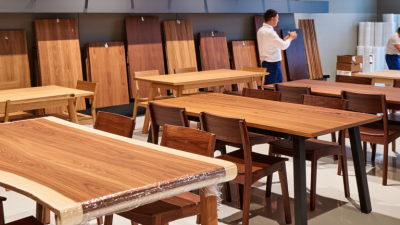
How to Choose a Wood Dining Table in 2026?
Choosing a wood dining table in 2026 means balancing beauty, durability, room size, and responsible sourcing. A table may look perfect online, yet feel too narrow beside real dining chairs. Measure your room first. Leave at least 36 inches for comfortable movement around the table.
Woodworker and furniture designer George Nakashima offered a lasting reminder: “The tree is not a thing, it is a living organism.” His words matter when comparing oak, walnut, ash, and reclaimed wood. Each species carries different grain patterns, hardness, maintenance needs, and environmental concerns. Oak often handles busy family meals well. Walnut brings darker color and a softer, more refined surface. Reclaimed wood adds character, but hidden repairs or uneven boards may require extra inspection.
Look closely at the construction. Solid wood can be repaired and refinished, but it may expand or contract with seasonal humidity. That is normal. It is not always a defect. Check the tabletop thickness, leg stability, joint quality, and finish consistency. Sit at the table before buying, if possible. Your knees should not touch the apron.
There is no universally best wood dining table. The wrong choice can still happen after careful research. A beautiful finish might show fingerprints quickly. A large table may overwhelm a small dining area. Ask about wood origin, formaldehyde-free finishes, warranty coverage, and care instructions. Choose a design that suits your daily habits, not only your current room photograph. Good furniture should age with dignity, even when life leaves a few marks.
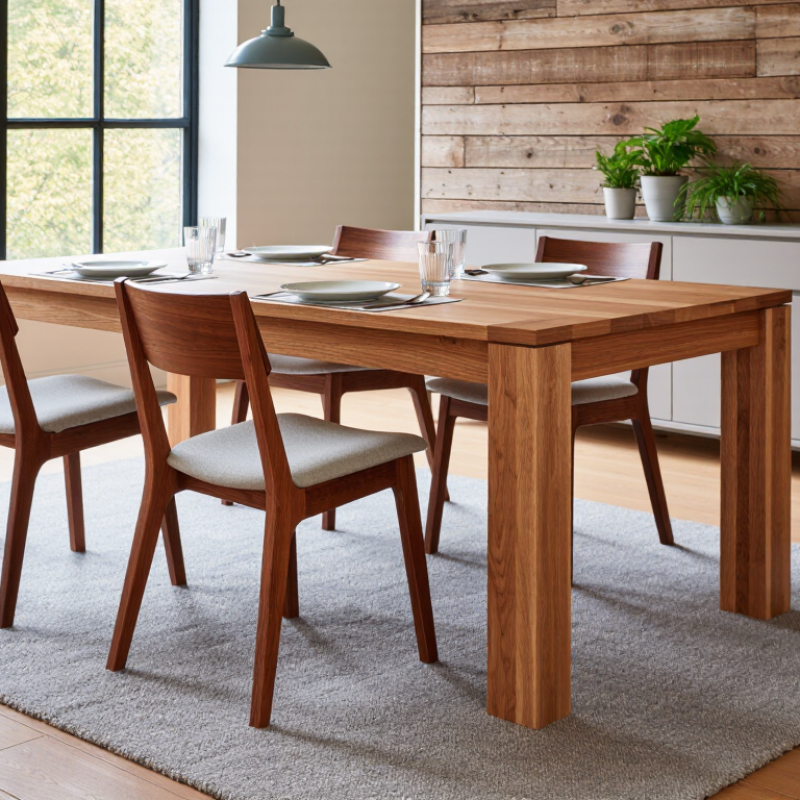
Measure Seating Capacity with 24 in per Person and 36 in Clearance (NKBA)
Choosing a Wood Dining Table in 2026?
A wood dining table should fit your room before you admire its finish. NKBA planning guidance uses 24 inches of table width per person for comfortable dining. This space allows plates, elbows, and modest serving dishes without constant contact. A 72-inch table, for example, suits three people on each long side. Add end seats only if the table legs leave enough knee room.
Measure the room, not just the tabletop. Keep at least 36 inches of clearance around the table for walking and pulling out chairs. In a narrow dining area, that number can feel optimistic. I once placed a table with exactly 36 inches behind one chair, but the nearby cabinet made the passage awkward. Real movement matters more than a perfect sketch.
Choose the wood carefully. Dense hardwood can handle daily use, while softer surfaces show dents and changing color more quickly. Check the finish under strong light, and inspect the underside for stable joinery. A pedestal base may improve legroom, but it can interfere with feet at the table ends. Measure chair width too; oversized chairs quietly reduce seating capacity. Leave room for imperfect behavior, such as a child pushing back suddenly or a guest carrying a hot dish. Good planning is not only about fitting more seats.
Compare Janka Hardness: Red Oak 1,290 vs Black Walnut 1,010 lbf (USDA)
How to Choose a Wood Dining Table in 2026?
Janka hardness offers a useful starting point when comparing dining table woods. According to USDA data, red oak measures 1,290 lbf, while black walnut measures 1,010 lbf. The test measures the force needed to press a steel ball halfway into the wood. A higher number usually means better resistance to dents from plates, toys, and daily impacts.
That difference is practical. Red oak may handle busy family meals with fewer visible depressions. Black walnut is softer, so chair arms, dropped cutlery, and grit beneath serving dishes may leave marks sooner. Still, hardness is not the whole story. Walnut often brings a deep brown color and refined grain, while oak can show stronger texture and a more pronounced surface pattern.
Look closely at the tabletop, not only the species label. Run your hand across the finish and inspect the edge for uneven sanding. Ask whether the boards were properly dried, because moisture changes can cause gaps or movement.
I once treated hardness as the deciding number. That was too simple. Joinery, finish quality, tabletop thickness, and household habits can matter just as much.
A hard surface can still stain or scratch. A softer table can age attractively when maintained carefully. Expect natural variation, too; USDA figures are reference values, not a guarantee for every board.
Confirm 6–8% Moisture Content for Indoor Wood Furniture (USDA)
Choosing a wood dining table in 2026 starts with moisture, not color or shape. For typical indoor furniture, aim for 6–8% moisture content, a USDA Forest Products Laboratory benchmark. This range suits heated and air-conditioned homes in many regions. A table with higher moisture may shrink after installation. Small gaps, loose joints, or cracked boards can follow.
Ask the seller for a moisture-meter reading from several areas, including the tabletop, legs, and underside. One reading is not enough. Wood can dry unevenly, especially near thick edges or glued joints. Look closely at the end grain. It should feel smooth, without fresh splits or dark damp patches. The table should also sit indoors for several days before heavy use, allowing the wood to adjust gradually.
I would not trust the phrase “kiln-dried” by itself. Drying quality depends on the final moisture level and storage conditions. A table can leave the workshop correctly dried, then absorb humidity during transport. I once overlooked a slightly raised tabletop edge because the finish looked attractive. That small flaw became more noticeable during a humid season. Regional climate matters, too. Homes near the coast or in dry mountain areas may need a different target, confirmed by a qualified woodworker. Ask for the measurement date, testing method, and care instructions before paying.
Evaluate Joinery and Seasonal Movement Using AWI Quality Standards
How to Choose a Wood Dining Table in 2026?
A beautiful tabletop can still fail if its joinery ignores seasonal movement. Wood expands and contracts mainly across the grain. Dry winter air may tighten joints, while humid summers can widen seams. I inspect the underside, not only the polished surface. Look for mortise-and-tenon joints, well-fitted dowels, or secure corner blocks. These details should feel firm without appearing forced.
Use the AWI Quality Standards as a practical reference for workmanship and consistency. The standards encourage properly fitted joints, clean transitions, and surfaces free from avoidable defects. Ask whether the top is attached with figure-eight fasteners, sliding clips, or elongated screw holes. These methods allow the wood to move. A rigidly glued connection between the top and apron deserves caution.
Check the table in natural light. Slight color variation and small figure differences may reflect genuine solid wood, not poor quality. However, open joints, loose legs, rough sanding, or uneven gaps need explanation. I once overlooked a small underside split because the top looked perfect. It expanded after one heating season. That mistake changed how I evaluate furniture. Ask about moisture content, finishing methods, and recommended indoor humidity. Around 35 to 55 percent relative humidity is generally safer for stable wood furniture. No table remains flawless forever. Good construction simply gives it room to age well.
How to Choose a Wood Dining Table in 2026? - Evaluate Joinery and Seasonal Movement Using AWI Quality Standards
| Evaluation Dimension | What to Check | Measured or Observed Data | Preferred Result | Quality Interpretation |
|---|---|---|---|---|
| Wood moisture content | Measure several locations on the tabletop, apron, and legs with a calibrated moisture meter. | Target approximately 6%–8% for many conditioned interior spaces; local climate and building conditions can change the appropriate range. | Readings should be reasonably consistent, with no unexplained wet areas or major differences between components. | Consistent moisture content reduces the risk of excessive shrinkage, swelling, splitting, and joint stress after delivery. |
| Tabletop panel width | Inspect the solid-wood top for wide boards, end joints, cracks, and visible seasonal gaps. | Solid wood changes primarily across the grain. A 1 m wide top can move by several millimetres as humidity changes, depending on species, grain orientation, and moisture range. | Boards should be properly conditioned, clearly described as solid or veneered, and free from uncontrolled splits or severe cupping. | Normal seasonal movement is expected; restrained movement or defective drying is not. |
| Top-to-base attachment | Look underneath the tabletop for figure-eight fasteners, elongated holes, sliding clips, or other movement-accommodating connections. | Attachment points should permit cross-grain movement rather than locking the top rigidly to the base. | Use mechanical connections that hold the top securely while allowing seasonal expansion and contraction. | A rigid cross-grain attachment can cause splitting, opened joints, warped aprons, or fastener failure. |
| Mortise-and-tenon joints | Examine the leg-to-apron and stretcher connections for tight shoulders, clean alignment, and absence of visible gaps. | A sound joint has continuous bearing at the shoulders, adequate glue coverage, and no rocking under moderate hand pressure. | Joints should be square, flush, fully seated, and designed so glue is not the only source of structural strength. | Well-fitted joinery supports durability and reduces loosening caused by repeated loading and seasonal movement. |
| Dovetail or pinned drawer joinery | For tables with drawers, inspect the front-to-side connections and the fit of the drawer bottom. | Pins or tails should be complete and consistently spaced; drawer bottoms should sit in properly fitted grooves rather than being merely surface-nailed. | The drawer should open smoothly without binding when humidity changes moderately. | Consistent joinery and movement allowance indicate better control of workmanship and long-term serviceability. |
| End-grain and edge treatment | Check end grain, corners, breadboard ends, and exposed edges for checking, sharp arrises, or uneven transitions. | Edges should be uniformly eased rather than left razor-sharp; end-grain areas should not show active splitting or open defects. | Small, even edge easing and stable end-grain details are preferred for safety and finish durability. | Proper edge preparation helps prevent impact damage, finish failure, and premature corner wear. |
| Flatness and warp | Place a straightedge across the tabletop in multiple directions and check whether the table rocks on a level floor. | There should be no obvious twist, severe cup, or spring-back. Any project tolerance should be defined in the written specification. | The top should remain stable under normal indoor conditions, with only minor, non-progressive movement. | Flatness is evaluated together with intended use, construction method, material grade, and the specified quality level. |
| Fasteners and hardware | Inspect screw heads, brackets, bolts, and concealed hardware for correct seating, corrosion resistance, and accessibility for adjustment. | Fasteners should be tight without crushing the wood, and elongated or slotted holes should be oriented to accommodate cross-grain movement. | Hardware should be appropriate for the load, concealed where practical, and replaceable or serviceable when required. | Correct hardware selection supports structural reliability without preventing natural wood movement. |
| Finish continuity | View the top in reflected light and inspect edges, underside surfaces, joints, and repaired areas. | The sheen, color, and texture should be reasonably uniform for the specified finish; runs, bare spots, fisheyes, and visible sanding scratches should be absent. | All accessible surfaces should receive a finish appropriate to the intended indoor use and maintenance requirements. | A continuous finish slows moisture exchange but does not stop seasonal movement; all sides should be considered. |
| Installation environment | Confirm that the dining area is protected from direct heat, prolonged sunlight, damp walls, and rapid humidity changes. | A commonly recommended indoor relative-humidity range is approximately 30%–60%, subject to the building, climate, and project requirements. | Allow the table to acclimatize indoors before final inspection and avoid placing it directly beside radiators or HVAC outlets. | Stable indoor conditions are essential for preserving the dimensional performance expected from properly made woodwork. |
| AWI-style quality review | Compare the table with the written project specification for materials, workmanship, finish, tolerances, and approved samples. | Architectural woodwork quality is commonly assessed by defined quality grades, documented tolerances, visual standards, and compliance with the specified construction method. | The selected table should meet the project’s stated quality grade and include clear requirements for movement, finish, inspection, and acceptable variation. | A quality standard is applied with the project documents; it should not be used as a substitute for an agreed specification or professional inspection. |
Selection principle: Choose a table with stable, properly conditioned wood, accurately fitted joinery, movement-accommodating attachments, consistent finishing, and a documented quality level suitable for its intended environment.
Compare Finishes with ASTM D3363 Hardness and D4060 Abrasion Tests
How to Choose a Wood Dining Table in 2026?
When comparing wood dining tables, inspect the finish, not only the wood species. ASTM D3363 pencil hardness testing shows how well a coated surface resists scratching from calibrated pencils. A higher rating can suggest better surface hardness. It does not guarantee protection from knives, grit, or heavy serving dishes.
ASTM D4060 abrasion testing measures wear under controlled rubbing conditions. The test records weight loss or surface damage after specified cycles. Ask for the wheel type, load, cycle count, and coating thickness. Read the conditions. Results from different laboratories may not be directly comparable. A finish tested on sealed oak may perform differently on walnut or ash.
A practical evaluation should match your household routine. Look for consistent sheen, smooth edges, and a surface that does not feel brittle. Hardness matters. Abrasion resistance matters too. They measure different weaknesses. A very hard finish may still show cloudy marks from heat or moisture, which these tests may not fully represent. That matters.
One common mistake is choosing the highest pencil-hardness result automatically. I once treated hardness as the complete durability story. It was not. Ask whether the sample was fully cured before testing, and check if the report identifies the wood substrate. Small details change results. For daily dining, balance tested performance with repairability, tactile comfort, and the table’s expected exposure to spills, crumbs, and repeated chair contact.
Related Posts
-
2026 Best Wood Dining Table Suppliers for Global Buyers
-
China Best Wood Dining Table Manufacturer for Global Buyers
-
Top 10 Round Kitchen Table Designs for Your Home Needs?
-
How to Choose the Perfect Leather Sectional for Your Home?
-
Why Choosing the Right Kitchen Table is Key: Boost Your Space & Dining Experience
-
Best Love Seat Sofa Options for Cozy Living Spaces?